Table of Contents
Did you know that nearly 40% of streaming interruptions are caused by simple local network configurations rather than server-side failures? When your favorite show freezes or a login screen refuses to budge, the frustration is real. You deserve a seamless viewing experience without constant technical headaches.

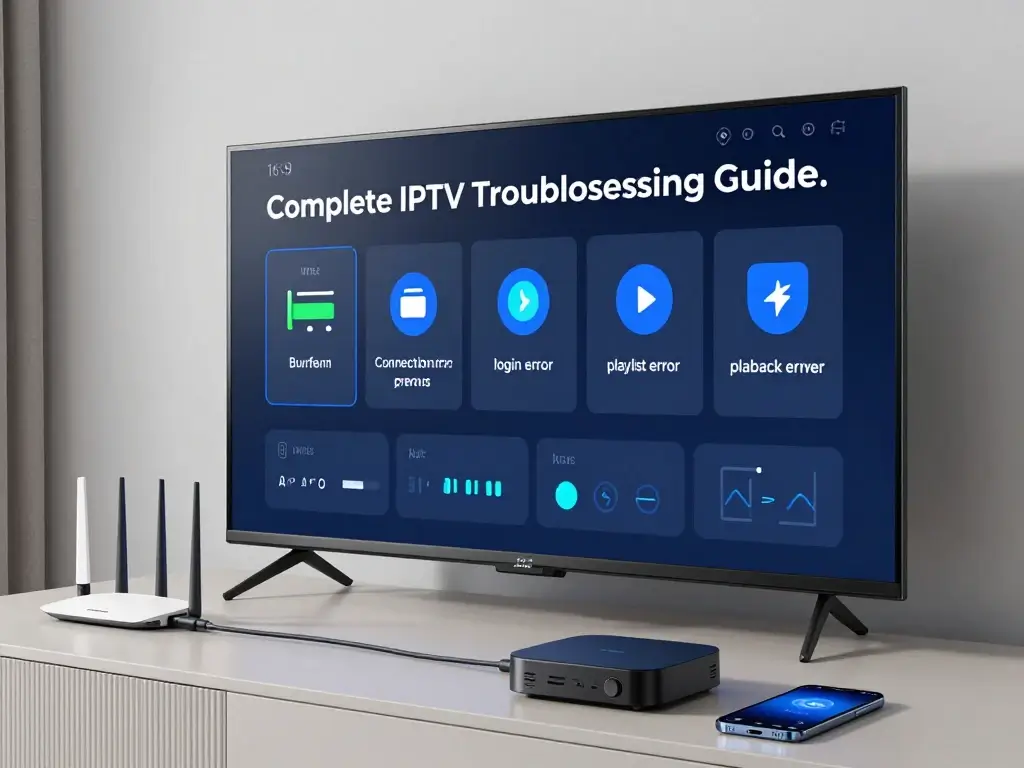
This iptv troubleshooting guide serves as your practical resource for diagnosing common digital failures. We will help you resolve persistent buffering, annoying login errors, and playback glitches across all your home devices.
You will learn to move from basic quick checks to advanced network and app adjustments. By following these steps, you can master your media setup and prevent future downtime. Let’s get your stream back on track with this essential iptv troubleshooting roadmap.
Key Takeaways
- Identify the root cause of common streaming interruptions quickly.
- Learn effective methods to fix buffering and playback errors.
- Master network and device settings to improve connection stability.
- Discover how to manage your playlists and provider links efficiently.
- Implement proactive measures to prevent future service failures.
IPTV Troubleshooting: Start With a Fast Problem Check
Before you start changing complex settings, a quick diagnostic check can save you significant time. Many iptv problems can be resolved by simply narrowing down the source of the error through a logical, step-by-step process.
Identify Whether the Problem Affects One Channel or Every Channel
The first step in your investigation is to determine the scope of the failure. Try switching to several different channels to see if the issue is widespread or isolated to a single stream.
If only one channel is failing, the problem likely lies with the source feed rather than your home setup. However, if you encounter consistent iptv issues across every channel, the fault is probably within your local network or the application itself.
Separate Device, App, Internet, and Provider Problems
Once you know the scope, you must isolate the potential culprit. Start by checking if your internet connection is stable, as a weak signal often mimics service outages.
Next, consider your hardware and software. If you are using a specific app on a Fire Stick or Smart TV, try testing the service on a different device to see if the behavior persists. This helps you decide if you are dealing with iptv problems related to your specific hardware or a broader service failure.
Record the Exact Error Message and When It Appears
Documentation is your best friend when diagnosing technical glitches. If an error code pops up on your screen, write it down immediately along with the time it occurred.
Note whether the error happens during startup, while loading a stream, or randomly during playback. Keeping a simple log of these specific iptv issues will make it much easier to find a solution or provide clear information if you need to contact your provider for support.
Check Your Internet Connection and Streaming Speed
Many common iptv connection problems can be traced back to your home network performance. When your stream stutters or fails to load, your internet connection is often the primary culprit.
Test Download Speed, Upload Speed, and Latency
To diagnose your network, run a speed test using a reliable site like Speedtest.net. You should look for more than just your download speed; latency and jitter are equally important for live streams.
High latency, often called “ping,” can cause your stream to lag behind the live broadcast. If your results show high jitter, your connection may be unstable, leading to frequent buffering.
Understand the Internet Speed You Need for IPTV
There is no single magic number for the perfect internet speed for iptv, as it depends on the resolution of your content. Standard definition streams require much less bandwidth than 4K Ultra HD content.
Generally, a stable connection of at least 25 Mbps is recommended for a smooth 4K experience. However, if multiple people are using the network simultaneously, you may need a higher tier plan to avoid congestion.
Improve Wi-Fi Signal Strength and Reduce Network Congestion
Wireless interference is a frequent cause of iptv connection problems. Walls, large appliances, and even neighboring Wi-Fi networks can weaken your signal strength significantly.
Try moving your router to a central, elevated location away from obstructions. You can also switch your device to the 5GHz band on your router to reduce interference from other household electronics.
When to Use an Ethernet Cable Instead of Wi-Fi
If you want the most reliable streaming experience, a wired connection is always superior to Wi-Fi. An Ethernet cable eliminates the signal drops and latency spikes common in wireless environments.
Connecting your streaming device directly to your router ensures that your internet speed for iptv remains consistent. This simple change often resolves persistent buffering issues immediately.
Restart Your Modem and Router Correctly
Sometimes, your networking hardware just needs a fresh start to clear out temporary errors. Unplug both your modem and router from the power outlet for at least thirty seconds.
Plug the modem back in first and wait for all the status lights to stabilize. Once the modem is ready, plug in your router and allow it a few minutes to re-establish your home network connection.
Fix IPTV Buffering, Freezing, and Slow Loading
Nothing ruins a movie night faster than a screen that keeps freezing or stuttering. When you encounter these interruptions, finding an effective iptv buffering fix is your top priority to get back to your entertainment.
Before you start changing complex settings, it is helpful to understand why these issues happen. Often, the problem stems from a mismatch between your internet speed and the stream quality.
Lower Video Quality to Test for Bandwidth Limits
If you notice that your iptv keeps freezing, the first step is to reduce the video quality within your app settings. Many players allow you to switch from 4K or 1080p down to 720p or lower.
By lowering the resolution, you significantly reduce the amount of data your connection needs to handle. If the stream plays smoothly at a lower quality, you have confirmed that your current bandwidth is the bottleneck.
Clear IPTV App Cache and Temporary Data
Over time, your app collects temporary files that can lead to iptv slow loading. Clearing this data is a simple way to refresh the application and improve performance.
IPTV Cache Guide for Android TV and Fire TV
Follow this iptv cache guide to clear your storage on popular streaming devices:
- Navigate to your device Settings menu.
- Select Applications or Apps.
- Find your IPTV app in the list and select it.
- Choose Clear Cache, then confirm the action.
Change the Stream or Playback Buffer Setting
Most professional IPTV players include a setting to adjust the playback buffer size. Increasing this value allows your device to download more of the video ahead of time.
A larger buffer acts as a safety net against minor network fluctuations. If you are experiencing frequent pauses, try setting your buffer to “Medium” or “Large” to see if it stabilizes the playback.
Stop Background Downloads and Other Streaming Activity
Your home network has a limited amount of total bandwidth to share among all connected devices. If someone else is downloading large files or streaming 4K video in another room, your IPTV stream will likely suffer.
Make sure to pause any active downloads or high-bandwidth tasks on your network during your viewing session. This ensures that your IPTV app receives the priority it needs for a smooth experience.
Recognize Whether the IPTV Server Is Causing the Buffering
Sometimes, the issue is not on your end at all. If you have tested your speed and cleared your cache but the stream still fails, the provider’s server might be overloaded.
Try switching to a different channel or a different category, such as Video on Demand. If other streams work perfectly while one specific channel buffers, the problem is almost certainly with the provider’s source rather than your home setup.
Resolve IPTV Login Failed and Authentication Errors
If you find yourself staring at an authentication error screen, do not panic, as most issues are simple to resolve. An iptv login failed message often stems from a minor typo rather than a major technical failure. By systematically checking your credentials, you can usually restore your access in just a few minutes.
Verify Your Username, Password, and Server URL
The most frequent cause of an iptv authentication error is a simple spelling mistake. Ensure that your username and password match exactly what your provider sent you, paying close attention to case sensitivity. Sometimes, a hidden space at the end of your password can prevent a successful connection.
Double-check your server URL for any missing characters or incorrect prefixes like “http” versus “https.” Even a single misplaced slash can cause the application to reject your request. Always copy and paste these details directly from your provider’s welcome email to avoid manual entry errors.
Check Expiration Dates, Device Limits, and Account Status
If your credentials are correct, your subscription might have expired without you realizing it. Many providers automatically disable access once the billing period ends. You should also verify if you have exceeded your device limit, as most services restrict the number of concurrent connections allowed on a single account.
“Security is the foundation of a stable streaming experience; always keep your account credentials private and monitor your device usage to prevent unauthorized access.”
Fix IPTV Authentication Errors Caused by Incorrect Provider Details
Sometimes the issue lies in how the application interprets the server information. If you are using a specific portal URL, ensure it is formatted correctly for the app you are using. If the provider recently updated their infrastructure, you may need to refresh your settings or input a new server address provided by their support team.
Common Xtream Codes Login Mistakes
When using Xtream Codes, users often forget to include the correct port number at the end of the URL. Another common mistake is failing to select the correct protocol, such as selecting “http” when the server requires “https.” Ensure that your app is configured to handle the specific API structure your provider uses.
Handle Locked Accounts and Repeated Login Attempts
If you attempt to log in too many times with incorrect information, the server may temporarily lock your IP address for security reasons. If you suspect this has happened, wait at least thirty minutes before trying again. During this time, contact your provider through their official support channel to confirm your account status.
| Issue | Likely Cause | Recommended Action |
|---|---|---|
| Invalid Credentials | Typo or case sensitivity | Re-enter details carefully |
| Server Unreachable | Incorrect URL or Port | Verify URL with provider |
| Account Locked | Too many failed attempts | Wait 30 minutes and retry |
| Device Limit Reached | Too many active sessions | Log out from other devices |
Fix IPTV Playlist Not Loading and M3U Problems
When your streaming service fails to display channels, the root cause often lies within your playlist settings. Seeing an iptv playlist not loading error can be incredibly frustrating, but most issues stem from simple configuration mistakes or outdated links.
Confirm That the M3U Playlist URL Is Complete and Current
The most common reason for a failure is an incomplete or expired URL. Always verify that you have copied the entire link provided by your service provider, as missing characters will prevent the app from fetching your channel list.
If your provider recently updated their infrastructure, your old link might be obsolete. Reach out to your support team to ensure you are using the most current version of your playlist address.
Check Whether the Playlist Requires a Specific User Agent
Some services require a specific “User Agent” string to identify your device correctly. Without this identifier, the server may reject your request, leaving your m3u playlist not working as expected.
Check your provider’s documentation to see if they mandate a specific string, such as “IPTVSmarters” or “VLC.” Entering this into your app’s settings can often resolve connectivity issues instantly.
Resolve M3U Playlist Not Working Errors in IPTV Apps
If your app still fails to load data, try clearing the application cache or re-adding the playlist from scratch. Sometimes, a simple refresh of the connection is all that is needed to clear out temporary glitches.
How to Test an M3U Link Without Exposing Account Credentials
You should never paste your full M3U link into public forums or unknown testing websites. These links often contain your unique username and password, which could lead to your account being stolen.
Instead, use a local media player like VLC on your computer to test the link privately. If the stream plays there, you know the link is valid and the issue is likely within your specific IPTV application.
Fix Xtream Codes Not Working After a Server or URL Change
Many users find their xtream codes not working after a provider migrates to a new server. Because these codes rely on a specific API URL, any change in the backend requires you to update your login credentials within the app.
Ensure that the server URL, username, and password fields are updated to match the latest information provided by your service. Even a small typo in the port number can prevent the API from authenticating your device.
Remove Duplicate or Corrupted Playlist Entries
Over time, your playlist might accumulate duplicate entries or corrupted data that confuses the app. Periodically reviewing your channel list can help you identify and remove these problematic items.
If your app allows for manual editing, delete any channels that consistently fail to load. A clean, organized playlist will not only load faster but will also reduce the likelihood of encountering playback errors during your viewing sessions.
Troubleshoot IPTV Playback Errors and Black Screens
If you are staring at a black screen instead of your live stream, you are likely facing a common playback issue. Finding an effective iptv black screen fix often depends on whether you can still hear audio coming from your device.
Fix an IPTV Black Screen With Audio or Without Audio
When you hear audio but see no video, the problem is usually related to how your device processes the visual data. If you have no audio and no video, the stream itself might be dead or your connection to the server could be blocked. Always check your internet stability first to ensure the data is actually reaching your player.
Switch Between Hardware and Software Video Decoding
Most IPTV apps allow you to choose between hardware and software decoding in the settings menu. Hardware decoding uses your device’s dedicated graphics chip, which is usually faster and more efficient. However, if you encounter an iptv playback error, switching to software decoding can force your device’s processor to handle the stream, which often resolves compatibility conflicts.
Resolve Unsupported Video Formats and Codec Problems
Sometimes, your player simply cannot understand the file format being sent by the provider. If the stream uses a newer codec that your device does not support, you will see a black screen or a spinning loading icon. You may need to use a more versatile player like VLC or MX Player to handle these specific formats.
Why Some 4K and High-Dynamic-Range Streams Fail
High-resolution 4K and HDR streams require significant processing power and specific display support. If your TV or streaming stick does not support the HDR metadata, the screen may remain black. Ensure your HDMI cables are high-speed and your display settings are configured for 4K output.
Correct IPTV Playback Errors After an App or Device Update
Updates can occasionally reset your preferences or introduce bugs that interfere with video rendering. If your issues started immediately after an update, try clearing the app cache or reinstalling the application. This simple step often clears out corrupted temporary files that cause a persistent iptv playback error.
Test Another Channel to Confirm a Stream-Specific Failure
Before you change your system settings, verify if the problem is limited to one channel. If other channels work perfectly, the issue is likely with the source stream rather than your device. A quick iptv black screen fix is often just finding a different link or channel that is currently online.
| Symptom | Likely Cause | Recommended Action |
|---|---|---|
| Black screen with audio | Decoder incompatibility | Switch to software decoding |
| Black screen, no audio | Server or network failure | Test a different channel |
| Loading icon persists | Bandwidth or codec issue | Lower quality or update app |
| 4K stream fails | Hardware limitation | Check HDMI and display settings |
Restore IPTV Audio and Correct Audio Sync Problems
Audio problems often disrupt the viewing experience, but they are usually simple to fix with a few quick adjustments. Whether you are dealing with total silence or annoying delays, a systematic approach helps you get back to your content quickly.
Fix IPTV Audio Not Working on One Channel or All Channels
If you notice that iptv audio not working is limited to a single channel, the issue likely lies with the stream source itself. Try switching to a different channel to see if the sound returns. If the audio is missing across every channel, the problem is likely within your device settings or your connection to the speakers.
Check TV Volume, Receiver Output, and Bluetooth Connections
Before diving into complex settings, verify the basics. Ensure your TV volume is not muted and that your external receiver or soundbar is set to the correct input. If you use wireless headphones, check your Bluetooth settings to ensure the device is not accidentally paired with another phone or tablet in your home.
Change Audio Tracks and Disable Incompatible Surround Sound Modes
Sometimes, the stream provides multiple audio tracks, and your device might be defaulting to one that is incompatible. Navigate to your app’s audio settings to select a different track, such as switching from 5.1 surround sound to stereo. Disabling advanced surround sound modes in your device settings can often resolve compatibility conflicts that cause audio drops.
Correct Delayed or Early Audio With Playback Synchronization Controls
When you encounter audio sync problems, the sound may arrive slightly before or after the video. Most modern IPTV players include a synchronization offset feature in their playback menu. You can manually adjust the audio delay in milliseconds until the sound perfectly matches the lip movements on the screen.
When HDMI, ARC, and eARC Settings Cause Audio Problems
If you use a soundbar or home theater system, your HDMI connection might be the culprit. Ensure your cable is securely plugged into the ARC or eARC port on your television. You may also need to enter your TV’s sound menu to toggle the digital output format between “Auto,” “PCM,” or “Pass-through” to ensure the signal is processed correctly.
Repair EPG, Catch-Up, and Recording Features
Getting the most out of your streaming experience requires more than just a stable connection; it needs a perfectly synced guide and reliable recording tools. When these features fail, your ability to navigate content or save programs for later becomes difficult. Taking a few moments to adjust your settings can often restore full functionality to your interface.
Fix EPG Not Working by Refreshing Guide Data
If you notice your epg not working, the first step is to force a manual refresh of your guide data. Most IPTV applications include a specific button in the settings menu labeled “Refresh EPG” or “Update Guide.” By triggering this, you force the app to fetch the latest schedule from your provider’s server.

Correct Time Zone, Date, and Electronic Program Guide Settings
An incorrect system clock is a common culprit for a blank guide. Ensure your device is set to the correct time zone and that the “Automatic Date & Time” feature is enabled. If your device time is off by even a few minutes, the Electronic Program Guide will fail to align with the current broadcast schedule.
Resolve Missing Channel Logos and Incorrect Program Information
Sometimes, the data stream for your channel icons or show descriptions may become corrupted. You can often fix this by clearing the cache of your IPTV app, which forces it to re-download all assets from scratch. If the problem persists, verify that your provider has not changed the URL for the EPG source in your playlist settings.
Restore Catch-Up Not Working Features
When you find your catch-up not working, it is important to distinguish between an app error and a service limitation. Many users assume that every channel supports playback, but this is not always the case. Always check if the specific channel you are trying to view has a small “clock” or “play” icon next to it, which indicates that catch-up is actually available.
Why Catch-Up Depends on Provider-Side Recording Support
It is vital to understand that catch-up functionality relies entirely on your provider’s server infrastructure. Even if your app is configured correctly, the feature will not function if the provider has not enabled recording for that specific stream. Your app is merely a window to the content stored on their end.
Check Storage and Permissions for DVR or Recording Functions
If your recordings are failing, your device might be running out of local storage space. Check your device settings to ensure you have enough free memory to save new video files. Additionally, verify that your IPTV app has the necessary permissions to access your device’s storage, as these are often revoked during system updates.
Stop IPTV Apps From Crashing or Closing Unexpectedly
When your streaming software closes unexpectedly, a few simple troubleshooting steps can often get things back on track quickly. Dealing with an iptv app crashing can be incredibly frustrating when you just want to relax and watch your favorite show. By following a logical sequence of repairs, you can restore your viewing experience without unnecessary stress.
Force Stop and Reopen the IPTV App
The first step is to perform a clean restart of the application. Simply exiting to the home screen is often not enough to stop background processes that may be causing the iptv app crashing issue.
- Navigate to your device’s Settings menu.
- Select Apps or Applications.
- Find your IPTV player and select Force Stop.
Update the App, Operating System, and Device Firmware
Outdated software is a frequent culprit for instability. Ensure that your streaming device is running the latest firmware and that your IPTV application is fully updated to the newest version available in your app store.
Clear App Cache Before Deleting App Data
Temporary files can become corrupted over time, leading to performance errors. You should clear the cache first, as this removes temporary data without deleting your login credentials or playlist settings.
If the problem persists, you may need to clear the app data. Please note that this will reset the app to its original state, so ensure you have your login details saved elsewhere.
Free Storage and Remove Conflicting Apps
Streaming devices often have limited internal storage. If your device is nearly full, the system may struggle to allocate enough memory for your IPTV player to function correctly.
Try uninstalling unused applications to free up space. This simple action often provides the breathing room your device needs to run smoothly.
When Reinstalling an IPTV App Is the Right Next Step
If you have exhausted the previous steps and the iptv app crashing continues, a fresh installation is often the best solution. Before you delete the app, back up your M3U playlist URL or login credentials to avoid losing access to your service.
Use a Stable App Version From a Trustworthy Source
Always download your applications from official sources like the Google Play Store or the Amazon Appstore. Using modified or “cracked” versions of apps from unverified websites often introduces bugs and security risks that lead to frequent crashes.
Fix IPTV Connection Problems on Smart TVs and Streaming Devices
When you find that your iptv not working, the issue often stems from how your specific hardware communicates with your home network. Smart TVs and dedicated streaming boxes require precise settings to maintain a stable stream. By adjusting these configurations, you can often resolve connectivity hurdles quickly.
Resolve Network Settings on Samsung, LG, and Android TVs
Modern smart TVs often struggle with network handshakes if the settings are not optimized. On Samsung and LG models, navigate to your network status menu to ensure the connection type matches your setup. If you use a wired connection, verify that the cable is secure and the TV recognizes the Ethernet port.
For Android TV users, check the advanced network settings to see if your IP address is assigned correctly. Sometimes, switching from a dynamic IP to a static one helps maintain a consistent link. This simple change can prevent your device from dropping the connection during high-traffic periods.
Reconnect Amazon Fire TV and Roku Devices to the Network
Streaming sticks like the Fire TV or Roku can occasionally lose their handshake with your router. If you notice your iptv not working, try “forgetting” your Wi-Fi network in the settings menu. Once removed, restart your device and reconnect to the network from scratch to refresh the authentication process.
Ensure your device is not tucked behind the TV, as this can block the signal. Using an HDMI extender often improves reception for Fire TV sticks. A clear line of sight to your router significantly boosts your streaming stability.
Check DNS, Date, Time, and Automatic Network Configuration
Many streaming apps rely on accurate time stamps to verify your subscription status. If your TV’s date or time is incorrect, the server may reject your connection. Always set your device to “Automatic” time and date synchronization to avoid these errors.
Additionally, changing your DNS settings to a public provider like Google or Cloudflare can resolve connectivity blocks. Many ISPs throttle traffic to certain servers, and a custom DNS helps bypass these restrictions. Check your network configuration to ensure your gateway and subnet mask are set to automatic unless you have a specific reason to change them.
Test IPTV on a Second Device to Isolate Hardware Issues
If you are still experiencing trouble, try running your service on a smartphone or a laptop. If the stream works perfectly on another device, the problem is likely isolated to your primary TV. This comparison helps you determine if you need to troubleshoot your hardware or contact your provider.
Recognize When an Older Device Cannot Handle Modern Streams
Sometimes, the hardware itself is the bottleneck. Older smart TVs often lack the processing power or memory to handle high-bitrate streams or modern video codecs. If your device is several years old, it may struggle to decode the data, leading to constant freezing or connection drops.
Restart the IPTV App After Changing Network Settings
After you modify any network or system settings, always perform a full restart of your application. Simply exiting to the home screen is often not enough to clear the previous session’s data. Force-closing the app ensures that it re-establishes a fresh connection with the server using your new, optimized settings.
Diagnose IPTV Server Offline and Provider-Side Issues
When your favorite shows stop playing, it is helpful to know how to distinguish between a local glitch and a broader provider-side failure. Often, an iptv server offline status is the culprit behind sudden service interruptions that affect your entire household.
Distinguish an IPTV Server Outage From a Local Connection Failure
Start by checking if other devices in your home can access the internet. If your web browser works but your streaming app does not, the issue is likely isolated to the service itself. Always verify your local connection before assuming the provider is at fault.
Check Provider Status Messages and Maintenance Notices
Many reputable services maintain a dedicated status page or a Telegram channel for updates. Checking these sources is a vital step in troubleshooting iptv service problems. If they have announced scheduled maintenance, you simply need to wait for the work to finish.
Compare Live TV, Video on Demand, and Catch-Up Availability
Test different categories to narrow down the scope of the error. If Live TV is down but Video on Demand (VOD) works, the issue might be specific to the live stream source. Comparing these features helps you provide better information to support teams.
Identify Expired Domains, Changed Ports, and Moved Servers
Sometimes, a provider changes their server URL or port without notifying users. If you suddenly see an authentication error, check your provider’s official website for any recent configuration updates. An iptv server offline message can sometimes be a false alarm caused by outdated login credentials.
What to Send Your Provider When Requesting Technical Support
When you reach out for help, be specific to speed up the resolution process. Include the following details in your message:
- Your account username or subscription ID.
- The specific error message or code you see on the screen.
- The device and app version you are currently using.
- A screenshot of the error if possible.
Use Caution With Unverified IPTV Services and Unofficial Support Links
Be wary of third-party websites claiming to offer support for your service. These sites often host malicious links or attempt to steal your login information. When troubleshooting iptv service, always stick to the official communication channels provided by your subscription source to keep your data safe.
Handle VPN Problems and Location-Related IPTV Issues
Many users rely on privacy tools, but these can occasionally trigger common iptv vpn problems. While these services protect your data, they can sometimes interfere with the high-speed requirements of live streaming.
Determine Whether the VPN Is Causing Slow Loading or Login Errors
Encryption overhead often slows down your connection, which might lead to buffering or authentication failures. If your login is rejected, the service might be flagging your VPN’s IP address as suspicious.
Always verify if your credentials work without the tunnel active. This simple step helps you isolate whether the issue lies with your account or your network configuration.

Test a Different VPN Server and Protocol
Not all servers provide the same performance for streaming media. You should try switching to a server located closer to your physical location to reduce latency.
Additionally, changing your connection protocol can make a significant difference. Protocols like WireGuard are often faster than older options, making them ideal for high-definition content.
Check for VPN Leaks, Blocked IP Addresses, and DNS Conflicts
Sometimes, your real IP address might leak, causing the provider to block your access due to location restrictions. You should also check your DNS settings to ensure they are not conflicting with your provider’s requirements.
If your IP address is blacklisted, the service will likely deny your connection attempts. Using a dedicated IP address from your provider can sometimes resolve these persistent iptv vpn problems.
Know When to Disable the VPN for Diagnostic Testing
When troubleshooting, it is vital to change only one variable at a time. If you cannot identify the source of a connection error, temporarily disable your security software to see if the stream resumes.
If the stream works perfectly while the tool is off, you have confirmed the source of the conflict. You can then adjust your settings or contact support with specific information about the interference.
Review Provider Terms and Local Laws Before Using a VPN
Before you commit to using a privacy tool, review your service provider’s terms of service. Some providers explicitly forbid the use of tunnels, which could lead to account termination.
Furthermore, ensure that your usage complies with local laws in the United States. Staying informed about your rights and responsibilities ensures a smooth and legal streaming experience.
Understand IPTV Error Codes and What They Mean
Seeing a stream stop suddenly is never fun, but iptv error codes explained in simple terms can turn a technical headache into a quick fix. These codes act like a diagnostic report for your connection, telling you exactly where the communication breakdown is happening. By learning to read them, you can save time and avoid unnecessary frustration.
Interpret HTTP 401 and 403 Authentication Errors
When you see a 401 or 403 error, your device is having trouble proving who you are to the server. A 401 Unauthorized error usually means your username or password is incorrect. You should double-check your login credentials for any typos or expired details.
A 403 Forbidden error is slightly different, as it means the server understands your request but refuses to grant access. This often happens if your account has reached its device limit or if your subscription has expired. Always verify your account status with your provider before assuming there is a major technical fault.
Interpret HTTP 404, 500, 502, and 503 Server Errors
These iptv error codes point toward issues on the provider’s end rather than your home network. A 404 error means the specific stream or file you are looking for cannot be found on the server. This often happens if a channel link has been moved or deleted.
Errors starting with a 5, such as 500, 502, or 503, indicate that the server is struggling. A 503 Service Unavailable message is common during high-traffic events when the server is overloaded. In these cases, there is little you can do except wait for the provider to perform maintenance.
Recognize Timeout, Network, and Connection Refused Messages
Sometimes your device cannot reach the server at all, resulting in a timeout or connection refused message. These errors usually stem from a weak internet signal or a firewall blocking the connection. You might need to restart your router or check if your VPN is interfering with the data flow.
Use Error Codes to Decide Whether to Change Settings or Contact Support
Knowing the difference between a local issue and a server-side problem helps you decide your next move. If the error is related to authentication, you can fix it by updating your settings. If the error is a server-side 503 code, you should contact your provider to report the outage.
Keep a Record of Repeated IPTV Error Codes
It is a smart idea to keep a simple log of the codes you see. If you notice a pattern, such as the same error appearing every night at 8:00 PM, you have valuable information to share with support. This record helps them identify if the problem is a recurring server glitch or a configuration error on your end.
| Error Code | Meaning | Recommended Action |
|---|---|---|
| 401 / 403 | Authentication Failed | Check login credentials and device limits. |
| 404 | Resource Not Found | Refresh playlist or contact provider. |
| 500 / 503 | Server Side Issue | Wait for maintenance or check status. |
| Timeout | Connection Failed | Check internet speed and VPN settings. |
Use an Efficient IPTV Troubleshooting Sequence
When your stream starts to stutter, having a reliable plan to fix IPTV problems can save you hours of frustration. Instead of making random adjustments, you should follow a logical workflow that isolates the issue quickly. This approach ensures you do not create new problems while trying to solve existing ones.
Restart the Device, App, Router, and Stream in the Correct Order
The most effective way to clear temporary glitches is a full power cycle. Start by closing your streaming application completely, then restart your streaming device, such as an Amazon Fire Stick or Android TV box. Finally, power cycle your router by unplugging it for thirty seconds before plugging it back in.
Once your network is stable, relaunch the application and attempt to load your stream again. This sequence often resolves common connectivity conflicts without requiring further technical intervention.
Test With a Different Channel, Playlist, and Network
To effectively troubleshoot IPTV errors, you must determine if the fault is local or server-side. Try switching to a different channel to see if the issue persists across your entire service. If the problem is isolated to one channel, the issue likely lies with your provider’s source.
You should also test your connection using a different network, such as a mobile hotspot, to rule out ISP throttling. If the stream works on a different network, your home internet configuration may be the culprit.
Change One Setting at a Time So You Can Identify the Cause
Many users make the mistake of changing multiple settings simultaneously, which makes it impossible to identify the actual fix. Always modify one variable at a time, such as switching from hardware to software decoding or adjusting your buffer size. If the change does not improve your experience, revert it immediately before trying the next step.
Back Up Playlist Details Before Resetting or Reinstalling an App
Before you decide to wipe your app data or perform a fresh installation, ensure you have a copy of your configuration. You should always keep a secure record of your service details to avoid losing access permanently.
Protect M3U URLs, Passwords, and Xtream Codes Credentials
“An ounce of prevention is worth a pound of cure when it comes to managing your digital credentials and streaming configurations.”
Your M3U URLs and Xtream Codes are the keys to your service. Keep these in a secure, encrypted password manager or a private document. Never share these details with unauthorized support forums, as they can be used to hijack your account or track your viewing habits.
Know When Basic Troubleshooting Has Reached Its Limit
Sometimes, the issue is entirely out of your control. If you have verified your internet speed, tested multiple channels, and confirmed your credentials are correct, you may be dealing with a provider-side outage. At this point, it is best to contact your service provider’s official support channel for assistance.
Do not waste time on repetitive resets if the service remains down for an extended period. Recognizing when to stop is a vital part of the process to fix IPTV problems efficiently.
Prevent Common IPTV Problems From Returning
Proactive care is the secret to enjoying a seamless viewing experience every single day. By focusing on IPTV maintenance, you can stop recurring technical issues before they interrupt your favorite shows. Taking small steps now saves you from the frustration of constant troubleshooting later.
Keep Your IPTV App, Device, and Router Updated
Software developers frequently release device updates to patch security holes and improve performance. Always check for the latest firmware on your streaming box or Smart TV. Similarly, ensure your router has the most recent software to maintain optimal network stability.
Maintain Free Storage and Clear Cache Periodically
Streaming apps often store temporary files that can clutter your system over time. You should clear your app cache every few weeks to keep the interface snappy. Keeping enough free storage space is also vital for streaming reliability, as low memory often leads to unexpected crashes.
Use Reliable Internet Equipment and a Stable Connection
Your hardware serves as the foundation for your entire home entertainment system. Using high-quality ethernet cables or a modern Wi-Fi 6 router significantly boosts your network stability. A consistent connection prevents the buffering and lag that often plague older, outdated networking gear.
Monitor Account Expiration, Playlist Changes, and Provider Notices
Many service interruptions occur simply because a subscription has expired or a server URL has changed. Stay informed by checking your provider’s official communication channels regularly. Keeping track of these details ensures you are never caught off guard by sudden service outages.
Create a Simple Record of Working Settings and Error Solutions
It is helpful to keep a small notebook or digital file containing your successful configurations. Documenting your server URLs, login methods, and previous fixes makes future IPTV maintenance much faster. When you know exactly what worked before, you can restore streaming reliability in minutes rather than hours.
| Maintenance Task | Frequency | Benefit |
|---|---|---|
| Clear App Cache | Monthly | Prevents App Crashes |
| Check Firmware | Quarterly | Improves Compatibility |
| Verify Subscription | Bi-Annually | Avoids Login Errors |
| Restart Router | Weekly | Ensures Network Stability |
Conclusion
Effective IPTV troubleshooting relies on your ability to isolate specific symptoms before you jump into complex settings. By testing your internet speed, clearing app caches, and verifying your provider status, you gain control over your digital entertainment. A methodical approach turns frustrating playback errors into simple, manageable tasks.
You should prioritize protecting your login credentials while keeping your devices updated. Maintaining a record of your successful configurations helps you resolve recurring issues quickly. When you document your settings, you save time during future maintenance sessions.
Reliable streaming requires consistent attention to your network equipment and software versions. If you exhaust your local diagnostic steps, reach out to your service provider with clear details about your error codes. Consistent IPTV troubleshooting ensures that your favorite content remains accessible and smooth. Your proactive habits today lead to a better viewing experience tomorrow.
FAQ
How can this guide help me fix IPTV problems on my own?
This IPTV troubleshooting guide is designed as a practical, step-by-step resource to help you diagnose and resolve common streaming failures. Whether you are dealing with iptv buffering, login errors, or playback issues, we walk you through everything from quick device checks to advanced network and provider configurations using a friendly, easy-to-follow approach.
Where should I start when my IPTV is not working?
Your first step in iptv troubleshooting is to determine the scope of the problem. Check if the issue affects just one channel or your entire service. By recording the exact iptv error codes and noting when they appear, you can quickly identify whether the culprit is your device, a specific app like IPTV Smarters, your internet connection, or the provider’s server.
What is the recommended internet speed for IPTV to avoid lag?
To ensure a smooth experience, the internet speed for IPTV should ideally be at least 10 Mbps for High Definition and 25 Mbps for 4K streams. If you are experiencing iptv connection problems, try switching from Wi-Fi to an Ethernet cable to reduce latency and network congestion, and always remember to restart your modem and router to refresh your connection.
What is the best IPTV buffering fix when my stream keeps freezing?
A reliable iptv buffering fix involves clearing your iptv app cache, lowering video quality to test bandwidth limits, and stopping background downloads on other devices. If your iptv keeps freezing, follow our iptv cache guide for Amazon Fire TV or Android TV to remove temporary data that often causes iptv slow loading and stuttering.
Why am I seeing an IPTV login failed or authentication error?
An iptv login failed message or an iptv authentication error usually stems from a typo in your username, password, or server URL. Double-check your Xtream Codes details for common mistakes, verify that your subscription hasn’t expired, and ensure you haven’t exceeded the maximum number of allowed devices on your account.
What should I do if my M3U playlist is not working or Xtream Codes are not loading?
If you find your iptv playlist not loading, first confirm the M3U playlist URL is complete and hasn’t been changed by your provider. When m3u playlist not working errors persist, or xtream codes not working messages appear after a server update, try testing the link in a different player like VLC Media Player to isolate the problem from your primary app.
Is there an IPTV black screen fix for when I have audio but no picture?
To implement an iptv black screen fix, try switching between hardware and software video decoding in your app settings. This often resolves iptv playback error messages caused by unsupported video formats or codec conflicts, especially on newer 4K High-Dynamic-Range streams that some older hardware cannot process.
How can I resolve audio sync problems or missing sound?
If your iptv audio is not working, start by checking your TV volume, receiver output, and Bluetooth connections. For audio sync problems, use the playback synchronization controls within apps like TiviMate to align the sound with the video. Disabling incompatible surround sound modes or checking HDMI ARC settings can also restore lost audio.
What should I do if the EPG or catch-up features are not working?
When you find the EPG not working, usually a simple refresh of the guide data or correcting your device’s time zone and date settings will fix it. If catch-up not working is the issue, remember that this feature depends on provider-side recording support; if the server hasn’t stored the program, your app won’t be able to play it back.
Why does my IPTV app keep crashing or closing unexpectedly?
An iptv app crashing is often due to low system memory or outdated software. Try to force stop the app, clear the cache, and ensure your operating system (like Fire OS or Android) is fully updated. If the app continues to fail, a clean reinstallation from a trustworthy source is often the most effective next step.
How do I troubleshoot IPTV connection problems on Smart TVs?
To fix iptv issues on Samsung, LG, or Sony Smart TVs, verify your DNS settings and automatic network configuration. If the service is still not working, test your playlist on a second device, like a smartphone or tablet, to see if the hardware in your TV is the bottleneck or if the problem lies with your home network.
How can I tell if my IPTV server is offline?
You can identify an iptv server offline status by checking your provider’s official status pages or social media notices. If your internet is working perfectly for other apps like YouTube or Netflix, but your IPTV service fails to load any content across Live TV and VOD, the issue is likely a provider-side outage or a moved server port.
Can a VPN cause IPTV VPN problems like slow loading or login errors?
Yes, iptv vpn problems are common if the server you’ve chosen is overloaded or blocked by the provider. If you experience iptv slow loading, try changing your VPN protocol or switching to a different server location. Always disable the VPN temporarily during iptv troubleshooting to see if it is the root cause of your connection failure.
Where can I find IPTV error codes explained?
Our guide provides iptv error codes explained in plain English. For example, HTTP 401 and 403 indicate iptv authentication error issues, while 404 or 503 errors usually mean the iptv server offline or the resource is missing. Keeping a record of these codes helps you decide whether to change your local settings or contact your provider for support.
What is the best way to troubleshoot IPTV problems without getting overwhelmed?
Use a methodical troubleshoot iptv errors sequence: restart your equipment in order (router, then device, then app), change only one setting at a time, and always back up your playlist details before a reset. This controlled approach ensures you identify the exact cause and helps you fix iptv problems much faster.
How can I prevent common IPTV issues from returning?
To prevent future iptv problems, keep your apps and device firmware updated, and use the iptv cache guide to perform periodic cleanups. Monitoring your account expiration dates and maintaining a stable internet connection with quality hardware will help ensure your iptv troubleshooting sessions become a thing of the past.