Setting up a new streaming device should be exciting—not frustrating. Whether you’ve just purchased your first Fire TV Stick or upgraded to the latest Fire TV Cube, you’re probably eager to start watching your favorite movies, TV shows, live sports, and streaming apps. Fortunately, Fire TV setup is a straightforward process when you know the right steps. With just a few minutes of preparation, you’ll be ready to enjoy thousands of entertainment options from the comfort of your home.
This comprehensive guide walks you through every stage of the Fire TV setup process, from connecting the device to your television to signing into your Amazon account and optimizing your settings for the best streaming experience. Along the way, you’ll also learn helpful tips, avoid common setup mistakes, and discover ways to improve performance from day one.
Whether you’re setting up a Fire TV for yourself, helping a family member, or replacing an older streaming device, this guide provides clear, beginner-friendly instructions designed for users in the United States. By the time you finish reading, you’ll have the confidence to complete your Fire TV setup quickly and start streaming without unnecessary delays.
Table of Contents
What Is Fire TV?
Amazon Fire TV is a streaming platform that transforms your television into a complete entertainment hub. Instead of relying on traditional cable or satellite television, Fire TV allows you to access thousands of streaming services, live TV apps, music platforms, games, and smart home controls through a single interface. Whether you enjoy blockbuster movies, binge-worthy television series, documentaries, or live sports, Fire TV makes finding and watching content simple.
One of the biggest advantages of Fire TV is its user-friendly interface. Everything is organized into categories, personalized recommendations, and voice-search capabilities powered by Alexa. This means you spend less time searching for content and more time enjoying it.
Fire TV devices also receive regular software updates that improve security, add new features, and enhance performance. As a result, your streaming device continues to improve long after you complete the initial setup.
Types of Fire TV Devices
Before beginning your Fire TV setup, it’s helpful to understand which device you own. Although the setup process is similar across all models, some features vary depending on the hardware.
Fire TV Stick Lite
The Fire TV Stick Lite is Amazon’s entry-level streaming device. It offers Full HD streaming and supports popular streaming services while providing an affordable option for first-time users.
Fire TV Stick HD
Designed for users with HDTVs, the Fire TV Stick HD delivers smooth streaming with improved performance over earlier generations. It supports voice search and most major streaming platforms.
Fire TV Stick 4K
If you own a 4K Ultra HD television, the Fire TV Stick 4K delivers sharper picture quality, HDR support, Dolby Vision compatibility, and immersive audio for a premium viewing experience.
Fire TV Stick 4K Max
The Fire TV Stick 4K Max builds on the standard 4K model by offering faster processing, improved wireless connectivity, and smoother app performance. It’s ideal for households with multiple streaming users.
Fire TV Cube
The Fire TV Cube combines streaming with smart home functionality. It includes built-in microphones that allow you to control your television and compatible smart home devices using hands-free Alexa voice commands.
Fire TV Smart TVs
Many television manufacturers now include Fire TV software directly inside their smart TVs. These models eliminate the need for an external streaming stick while providing the same familiar Fire TV interface.
Why Choose Fire TV?
Streaming devices have become increasingly popular, but Fire TV stands out because it combines powerful hardware with a simple user experience. Instead of switching between different devices or juggling multiple remotes, Fire TV centralizes your entertainment in one place.
One major benefit is Alexa integration. You can search for movies, launch apps, adjust the volume, control smart lights, check the weather, or even view security cameras using simple voice commands.
Fire TV also supports nearly every major streaming service available in the United States, including:
- Prime Video
- Netflix
- Disney+
- Hulu
- Max
- Peacock
- Paramount+
- Apple TV+
- YouTube
- ESPN
- Sling TV
- Tubi
- Pluto TV
Because Fire TV supports both subscription-based and free streaming services, you can customize your entertainment experience without being locked into one provider.
What You Need Before Starting Fire TV Setup
Preparing everything before you begin makes the entire setup process much smoother. Spending a few minutes gathering the necessary equipment can prevent interruptions later.
Below is a quick checklist of everything you’ll need before starting.
Fire TV Setup Checklist
| Requirement | Why It’s Needed | Recommendation |
|---|---|---|
| Television | Display Fire TV | HDTV or 4K TV |
| HDMI Port | Connect Fire TV | HDMI 2.0 or newer preferred |
| Wi-Fi Connection | Internet access | Stable broadband connection |
| Amazon Account | Register device | Existing or new account |
| Fire TV Remote | Device navigation | Included with device |
| AAA Batteries | Power remote | Included in most packages |
| Power Adapter | Device power | Use Amazon’s supplied adapter |
Having these items ready ensures that your Fire TV setup takes approximately 10 to 20 minutes instead of becoming a lengthy troubleshooting session.
Choosing the Right HDMI Port
Many televisions include multiple HDMI inputs. Although Fire TV works with nearly all HDMI ports, selecting the right one can improve your viewing experience.
If your television supports 4K or HDR content, choose the HDMI port specifically labeled as:
- HDMI ARC
- HDMI eARC
- HDMI 2.0
- HDMI 2.1
- 4K
- UHD
Using the correct port helps maximize picture quality while ensuring compatibility with advanced audio technologies such as Dolby Atmos.
If you’re unsure which HDMI port to use, consult your television’s manual or simply test each available input after connecting the Fire TV device.
Internet Requirements for Fire TV Setup
Since Fire TV relies on online streaming, your internet connection significantly affects performance. Slow internet speeds can lead to buffering, blurry video, and interrupted playback.
The following table provides recommended internet speeds for different streaming resolutions.
| Streaming Quality | Recommended Speed |
|---|---|
| Standard Definition (SD) | 3–5 Mbps |
| High Definition (HD) | 5–10 Mbps |
| Full HD | 10 Mbps or higher |
| 4K Ultra HD | 25 Mbps or higher |
If multiple people in your home stream videos, play online games, or attend video meetings simultaneously, consider subscribing to a faster internet plan for the best overall experience.
Creating or Using an Amazon Account
Every Fire TV device must be linked to an Amazon account before you can access apps and streaming services. If you already shop on Amazon, you can simply sign in using your existing email address and password.
Creating a new Amazon account only takes a few minutes if you don’t already have one. Registration allows you to:
- Download streaming apps
- Purchase or rent movies
- Save device settings
- Synchronize preferences
- Access Prime Video (with a Prime membership)
- Receive software updates
Using your personal Amazon account also makes it easier to restore your preferences if you replace your Fire TV device in the future.
Unboxing Your Fire TV
Before plugging anything into your television, take a moment to verify that all accessories are included in the package.
Most Fire TV devices include:
- Fire TV Stick or Fire TV device
- Alexa Voice Remote
- Power adapter
- USB power cable
- HDMI extender (select models)
- Two AAA batteries
- Quick Start Guide
Inspect everything for visible damage before beginning installation. If anything appears to be missing, contact the retailer before proceeding with setup.
How to Set Up Fire TV Step by Step
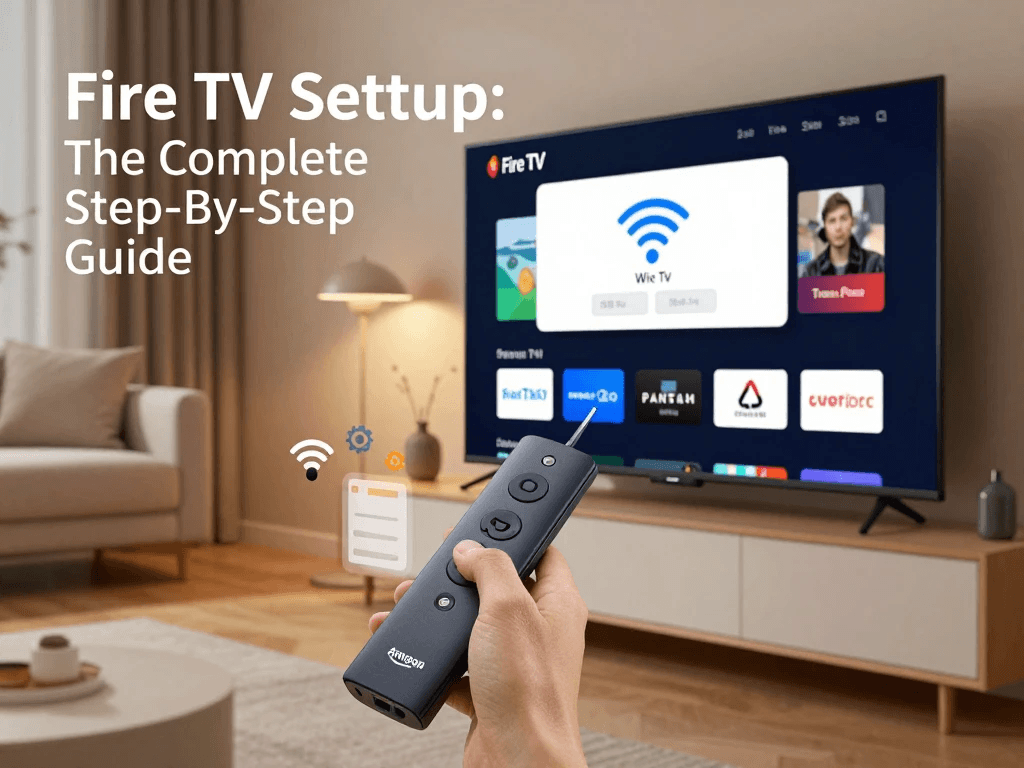
Now that everything is prepared, it’s time to begin the actual Fire TV setup process. Following these steps in order helps minimize problems and ensures your device is configured correctly from the start.
Step 1: Connect Fire TV to Your Television
Start by locating an available HDMI port on your television.
Insert your Fire TV device directly into the HDMI port. If space is limited or the device doesn’t fit comfortably, use the included HDMI extender to create additional clearance.
Next, connect the USB power cable to the Fire TV device and plug the other end into the supplied power adapter. Although some televisions include USB ports, Amazon recommends using the wall adapter because it provides a more stable power supply. Insufficient power from a television’s USB port may cause slow performance, unexpected restarts, or startup issues.
Once everything is connected, turn on your television and select the correct HDMI input using your TV remote.
After a few moments, you’ll see the Fire TV startup screen.
Step 2: Insert Batteries and Pair the Fire TV Remote
Open the battery compartment on the back of the Alexa Voice Remote and insert the supplied AAA batteries.
Most Fire TV remotes pair automatically during the initial startup process. Within a minute, the screen should display confirmation that the remote has connected successfully.
If automatic pairing doesn’t occur, simply press and hold the Home button for approximately ten seconds until the pairing process begins.
Once connected, use the directional buttons to navigate through the setup screens.
The Alexa Voice Remote provides several convenient features, including:
- Voice search
- Volume controls
- TV power button
- App shortcuts
- Playback controls
- Alexa smart home commands
Learning the remote layout early makes navigating Fire TV much easier throughout daily use.
Step 3: Select Your Preferred Language
The first setup screen asks you to choose your preferred language.
Scroll through the available options using the remote’s navigation ring and select the language you’re most comfortable using.
After selecting a language, Fire TV automatically applies your choice throughout the operating system, including menus, settings, and many compatible apps.
Choosing the correct language now saves time later and ensures a more personalized experience.
Step 4: Connect Fire TV to Wi-Fi
A reliable internet connection is essential because Fire TV streams nearly all of its content online.
The setup wizard automatically scans for nearby wireless networks.
To connect:
- Select your home Wi-Fi network.
- Enter your wireless password.
- Confirm the connection.
- Wait while Fire TV verifies internet access.
If your router supports both 2.4 GHz and 5 GHz networks, you’ll usually achieve better streaming performance by connecting to the 5 GHz network, provided your Fire TV device is within range.
Once connected, Fire TV may automatically download available software updates before continuing.
Step 5: Sign In to Your Amazon Account
After connecting to the internet, Fire TV prompts you to register the device with your Amazon account.
Enter your email address or mobile number along with your Amazon password.
If you’ve previously purchased your Fire TV directly from Amazon, it may already be registered to your account. In that case, simply confirm the registration information displayed on screen.
Signing in unlocks access to:
- Prime Video
- App downloads
- Purchases
- Alexa features
- Personalized recommendations
- Device synchronization
This step also enables your Fire TV to back up certain settings, making future device replacements much easier.
Step 6: Install Available Software Updates
Once your account is connected, Fire TV checks for software updates automatically.
Although waiting for updates may feel like a delay, installing the latest version of Fire OS ensures better security, improved stability, bug fixes, and compatibility with newer apps.
Depending on your internet speed, the update process typically takes between five and fifteen minutes.
Avoid unplugging the device while updates are being installed. Interrupting the update process could require additional troubleshooting before the device functions correctly.
Step 7: Complete the Initial Configuration
After updating, Fire TV guides you through a few final customization options. These settings help tailor the device to your preferences and improve your overall streaming experience.
During this stage, you may be asked to:
- Name your device
- Set parental controls
- Choose privacy preferences
- Enable Alexa voice features
- Restore previously installed apps
- Configure display settings
- Select recommended streaming services
Take a few moments to review each option carefully. While most settings can be changed later, configuring them correctly now creates a smoother experience from the beginning.
Once you’ve completed these final steps, your Fire TV setup is essentially complete, and you’ll be taken to the Fire TV home screen, where you can begin exploring apps, installing streaming services, and enjoying your favorite entertainment.
Fire TV Remote Setup and Pairing
Your Alexa Voice Remote is the primary way you’ll interact with your Fire TV, making proper pairing essential for a smooth streaming experience. Although most remotes connect automatically during the initial Fire TV setup, there are times when you may need to pair the remote manually or reconnect it after replacing batteries or resetting the device. Fortunately, the process is simple and usually takes less than a minute. Once paired, the remote allows you to navigate menus, launch apps, adjust the volume, control compatible televisions, and use Alexa voice commands. Taking a few extra minutes to configure your remote properly ensures reliable performance and minimizes interruptions while you’re enjoying your favorite content.
Understanding the Alexa Voice Remote
Amazon has introduced several versions of the Alexa Voice Remote over the years, but they all share a familiar layout and core functionality. Depending on your Fire TV model, your remote may include dedicated app buttons, television controls, and programmable shortcuts. Regardless of the version you own, each remote is designed to simplify navigation and reduce the need for multiple remotes. Voice control is one of its biggest advantages, allowing you to search for movies, open apps, or control compatible smart home devices simply by pressing the Alexa button and speaking naturally. Learning what each button does helps you get the most from your Fire TV experience.
Main Remote Buttons
| Button | Function |
|---|---|
| Power | Turns compatible TV on or off |
| Alexa | Activates voice commands |
| Navigation Ring | Moves through menus |
| Select | Confirms selections |
| Home | Returns to the Fire TV home screen |
| Back | Goes to the previous screen |
| Menu | Opens additional options |
| Rewind | Rewinds supported content |
| Play/Pause | Controls playback |
| Fast Forward | Skips ahead |
| Volume Controls | Adjust TV volume |
| Mute | Silences TV audio |
How to Pair Your Fire TV Remote Automatically
In most cases, pairing occurs without any manual steps. After inserting the batteries and powering on your Fire TV, the device searches for the included remote automatically. Within a few seconds, you’ll usually see a confirmation message indicating that the pairing process is complete. Once connected, test the directional buttons, Home button, and volume controls to verify everything is working properly. If the remote responds immediately, no further configuration is necessary. Automatic pairing is the fastest and easiest method, making the initial Fire TV setup accessible even for users with limited technical experience.
How to Pair Your Fire TV Remote Manually
Sometimes the automatic pairing process doesn’t complete successfully. This can happen after changing batteries, performing a factory reset, or using a replacement remote. Fortunately, manual pairing only requires a few simple steps.
Manual Pairing Instructions
- Turn on your Fire TV.
- Stand within approximately 10 feet of the device.
- Press and hold the Home button for about 10 seconds.
- Wait for the pairing notification to appear on your television.
- Release the button after the remote connects.
If the remote doesn’t pair the first time, remove the batteries, wait 30 seconds, reinstall them, and repeat the process.
Pairing Multiple Remotes
One convenient Fire TV feature is support for multiple remotes. This is especially helpful in larger households where different family members watch television in different rooms or frequently misplace the primary remote. Additional remotes can be paired through the Fire TV settings menu without affecting the original remote. Once connected, each remote functions independently, allowing anyone nearby to control the device. This flexibility also makes replacement easier if the original remote becomes damaged or stops working. Having a spare remote available can save time and prevent interruptions when you want to start streaming quickly.
Add Another Remote
- Open Settings.
- Select Controllers & Bluetooth Devices.
- Choose Amazon Fire TV Remotes.
- Select Add New Remote.
- Follow the pairing instructions shown on-screen.
Fire TV Wi-Fi Setup and Internet Troubleshooting
A stable internet connection is the foundation of every enjoyable streaming experience. While the Fire TV setup process includes connecting to Wi-Fi, problems can occasionally appear after installation. Buffering, slow downloads, connection drops, and poor video quality are usually caused by network issues rather than problems with the Fire TV itself. Fortunately, most connectivity problems can be resolved with a few simple adjustments. Understanding how Fire TV communicates with your wireless network allows you to identify issues quickly and restore smooth streaming without unnecessary frustration.
Connecting Fire TV to Wi-Fi
If you skipped the wireless setup earlier or changed internet providers, reconnecting your Fire TV is straightforward. Simply open the network settings, select your wireless network, and enter the updated password. Once connected, Fire TV remembers the network automatically, so you won’t need to reconnect every time you turn on your television. If your router broadcasts separate 2.4 GHz and 5 GHz networks, choosing the faster 5 GHz option generally delivers smoother 4K streaming and faster app downloads, provided the signal strength remains strong throughout your home.
Steps to Connect
- Open Settings.
- Select Network.
- Choose your Wi-Fi network.
- Enter your password.
- Confirm the connection.
Common Wi-Fi Problems
Most internet-related issues have simple solutions. Before contacting your internet provider, try basic troubleshooting steps such as restarting your router or reconnecting to your network. Many streaming interruptions disappear after refreshing the connection.
| Problem | Possible Cause | Recommended Solution |
|---|---|---|
| Won’t connect | Incorrect password | Re-enter Wi-Fi password |
| Buffering | Slow internet | Restart router or upgrade speed |
| Frequent disconnects | Weak signal | Move router closer |
| Apps load slowly | Network congestion | Limit other connected devices |
| No network found | Router issue | Restart modem and router |
Improve Your Wi-Fi Signal
The placement of your router can dramatically affect streaming quality. Walls, appliances, and long distances weaken wireless signals, particularly on faster 5 GHz networks. If your Fire TV frequently buffers or disconnects, moving the router closer to your television often produces immediate improvements. You can also reduce interference by keeping the router away from microwave ovens, cordless phones, and other electronic devices that share similar frequencies. In larger homes, a mesh Wi-Fi system or range extender may provide more consistent coverage throughout every room, resulting in smoother streaming across all connected devices.
Recommended Internet Speeds
Although Fire TV functions on relatively modest internet connections, faster speeds provide a noticeably better viewing experience. Streaming services automatically adjust video quality based on available bandwidth, meaning slower connections often produce lower-resolution video or frequent buffering. If multiple family members stream simultaneously, additional bandwidth becomes even more important. Investing in a reliable broadband connection ensures your Fire TV performs at its best, particularly when watching live sports or ultra-high-definition movies.
| Streaming Activity | Recommended Speed |
|---|---|
| SD Streaming | 3–5 Mbps |
| HD Streaming | 5–10 Mbps |
| Full HD | 10–15 Mbps |
| 4K UHD | 25 Mbps or higher |
| Multiple 4K Streams | 50 Mbps or higher |
Customize Your Fire TV After Setup
Completing the initial Fire TV setup is only the beginning. Personalizing your device allows you to create an entertainment experience that matches your preferences and viewing habits. From installing streaming apps to adjusting display settings and configuring Alexa, these customizations make navigation faster and more enjoyable. Spending a little time organizing your Fire TV now can save countless clicks later. You’ll also improve performance by removing unnecessary apps and enabling features that enhance picture quality, accessibility, and privacy.
Install Your Favorite Streaming Apps
One of Fire TV’s greatest strengths is its extensive app library. Whether you subscribe to premium streaming platforms or prefer free ad-supported services, you’ll find thousands of entertainment options available for download. Installing only the apps you actually use helps keep your home screen organized and makes navigation more efficient. New apps can be added anytime through the Amazon Appstore, allowing your Fire TV to grow with your entertainment needs.
Popular Streaming Apps
- Prime Video
- Netflix
- Disney+
- Hulu
- Max
- Peacock
- Paramount+
- Apple TV+
- YouTube
- ESPN
- Sling TV
- Pluto TV
- Tubi
- Spotify
- Plex
Organize Your Home Screen
After installing several apps, your Fire TV home screen may become crowded. Fortunately, Amazon allows you to rearrange apps so your favorites appear first. Place frequently used streaming services near the beginning of the app list while moving less frequently used applications farther down. A clean, organized interface helps you find content more quickly and creates a more enjoyable viewing experience. Taking a few minutes to organize everything after setup makes daily navigation noticeably easier.
Configure Display Settings
Modern Fire TV devices automatically detect many television capabilities, but manually reviewing your display settings ensures optimal picture quality. Depending on your television, you can adjust screen resolution, HDR settings, frame rate matching, and dynamic range. If you own a 4K television, verify that Fire TV is outputting Ultra HD resolution rather than defaulting to Full HD. Proper display configuration helps movies, television shows, and sporting events appear sharper, brighter, and more lifelike.
Set Up Alexa Voice Features
Alexa transforms your Fire TV from a basic streaming device into a smart home hub. Once enabled, you can search for movies, control playback, adjust volume, launch apps, and even operate compatible smart lights, thermostats, or security cameras using voice commands. Alexa also answers questions about weather, traffic, sports scores, and calendar appointments. Learning a few common commands makes navigating Fire TV much faster than scrolling through menus manually.
Useful Alexa Commands
- “Open Netflix.”
- “Play action movies.”
- “Pause.”
- “Resume.”
- “Fast forward two minutes.”
- “Show comedy movies.”
- “What’s the weather today?”
- “Turn off the living room lights.”
Best Fire TV Settings for Better Performance
While Fire TV works well immediately after installation, adjusting a few settings can improve speed, responsiveness, and long-term reliability. These optimizations reduce clutter, free storage space, and help apps perform more consistently. Most settings only need to be configured once, yet they continue improving performance every day you use your device. Whether you stream occasionally or every evening, these small changes can noticeably enhance your overall experience.
Keep Fire OS Updated
Amazon regularly releases Fire OS updates that introduce new features, improve security, and resolve software bugs. Allowing your Fire TV to install updates automatically ensures you’re always using the latest version of the operating system. These updates frequently improve app compatibility and system stability while protecting your device against newly discovered security vulnerabilities. Checking for updates periodically is a good habit, especially if your Fire TV hasn’t been connected to the internet for an extended period.
Clear App Cache Regularly
Every application stores temporary files called cache data to improve loading times. Over time, however, excessive cached data can slow performance and consume valuable storage space. Clearing the cache removes unnecessary temporary files without deleting your account information or preferences. Performing this maintenance every few months keeps apps running smoothly and reduces unexpected crashes.
Clear Cache Steps
- Open Settings.
- Select Applications.
- Choose Manage Installed Applications.
- Select an app.
- Choose Clear Cache.
Remove Unused Apps
Installing dozens of streaming services may seem convenient, but unused apps occupy storage space and occasionally continue updating in the background. Removing applications you rarely use frees storage, speeds software updates, and creates a cleaner interface. Don’t worry if you change your mind later—you can always reinstall apps from the Amazon Appstore without additional cost if they’re free.
Performance Optimization Checklist
| Optimization | Benefit |
|---|---|
| Enable automatic updates | Improved security and stability |
| Remove unused apps | More available storage |
| Clear app cache | Faster performance |
| Restart weekly | Refreshes system memory |
| Use 5 GHz Wi-Fi | Better streaming speeds |
| Organize apps | Easier navigation |
| Enable HDMI-CEC | Control TV with one remote |
Fire TV Setup Troubleshooting Guide
Even though Fire TV setup is generally simple, occasional issues can arise during installation or daily use. The good news is that most problems have straightforward solutions requiring only a few minutes to resolve. Before assuming your device is defective, work through these troubleshooting steps systematically. In many cases, restarting the Fire TV, checking cable connections, or updating software restores normal operation without requiring professional support or replacement hardware.
Fire TV Won’t Turn On
If your Fire TV shows no signs of power, begin by checking the power adapter and USB cable. Amazon recommends using the included wall adapter instead of your television’s USB port because many TVs cannot supply enough power for consistent operation. Also verify that the HDMI connection is secure and the correct television input is selected. If the device still doesn’t start, unplug it for one minute before reconnecting the power cable.
Remote Isn’t Responding
A non-responsive remote is usually caused by depleted batteries, pairing problems, or wireless interference. Replace the batteries first, then restart your Fire TV and repeat the manual pairing process. If another Bluetooth device is interfering, temporarily disconnect it and test the remote again. In most situations, these simple steps restore functionality without additional troubleshooting.
No Picture on the TV
If your television displays a blank screen, verify that you’ve selected the correct HDMI input. Try connecting the Fire TV to another HDMI port or testing it on a different television if available. Loose HDMI connections are among the most common causes of display problems. Restarting both the television and Fire TV often resolves temporary communication issues between the devices.
Fire TV Freezes or Runs Slowly
Occasional freezing usually results from low available storage, outdated software, or apps consuming excessive system resources. Restart the Fire TV first, then install any available software updates. Clearing cached data and uninstalling unnecessary applications often restores normal responsiveness. If problems continue after basic maintenance, performing a factory reset may eliminate persistent software conflicts.
How to Factory Reset Fire TV
A factory reset returns your Fire TV to its original condition by removing apps, settings, and account information. This should be considered a last resort after other troubleshooting methods have failed. Before resetting, make sure you know your Amazon account credentials so you can complete the setup again afterward.
Factory Reset Steps
- Open Settings.
- Select My Fire TV.
- Choose Reset to Factory Defaults.
- Confirm your decision.
- Wait for the reset process to finish.
Once the reset is complete, you’ll repeat the Fire TV setup process just as you did when the device was new.
Fire TV Tips and Hidden Features
Once you’ve completed your Fire TV setup, there’s much more to explore beyond streaming movies and television shows. Fire TV includes dozens of built-in features that many users never discover, from voice shortcuts and screen mirroring to gaming support and smart home integration. Learning these hidden capabilities helps you get more value from your device while creating a smoother and more personalized entertainment experience. Whether you’re a casual streamer or a tech enthusiast, these tips can save time, improve convenience, and unlock features you may not have realized were available.
Use Alexa Like a Pro
Alexa is one of Fire TV’s most powerful features. Instead of scrolling through endless menus, you can simply press the Alexa button on your remote and speak naturally. Voice commands make it faster to search for content, launch apps, control playback, and even manage compatible smart home devices. As Alexa continues to improve through software updates, you’ll gain access to even more convenient voice capabilities without purchasing additional hardware. Learning a handful of useful commands can significantly reduce the time you spend navigating menus and searching for entertainment.
Popular Alexa Commands
- “Open Netflix.”
- “Play comedy movies.”
- “Find action movies released this year.”
- “Pause.”
- “Resume.”
- “Skip ahead five minutes.”
- “Show my Watchlist.”
- “Turn off the bedroom lights.”
- “What’s the weather today?”
- “Open YouTube.”
Mirror Your Phone or Tablet
Screen mirroring lets you display compatible smartphone, tablet, or computer content directly on your television. This feature is especially useful for viewing family photos, presentations, vacation videos, or personal recordings on a larger screen. Instead of passing your phone around the room, everyone can enjoy the content together. Depending on your device, screen mirroring may use Miracast, AirPlay (through supported apps), or third-party applications available in the Amazon Appstore.
Benefits of Screen Mirroring
- Share photos with family
- Display presentations
- Watch personal videos
- Mirror mobile games
- View educational content
- Demonstrate apps
Connect Bluetooth Devices
Fire TV supports numerous Bluetooth accessories, making your entertainment setup even more flexible. Wireless headphones are particularly useful for late-night viewing when you don’t want to disturb others. Bluetooth speakers, keyboards, game controllers, and certain accessibility devices can also be paired for added convenience. Pairing usually takes only a minute and creates a cleaner setup with fewer cables around your television.
Compatible Bluetooth Devices
| Device | Primary Use |
|---|---|
| Wireless Headphones | Private listening |
| Bluetooth Speakers | Enhanced audio |
| Game Controllers | Gaming |
| Bluetooth Keyboard | Faster text entry |
| Accessibility Devices | Improved usability |
Create Individual User Profiles
If multiple people use the same Fire TV, creating separate profiles helps personalize everyone’s experience. Each profile can maintain its own watch history, recommendations, app preferences, and content suggestions. This keeps your viewing habits from influencing someone else’s recommendations. Profiles are especially useful for households where family members enjoy different genres, helping Fire TV provide more accurate content suggestions over time.
Explore Free Streaming Content
One of the biggest misconceptions about Fire TV is that every app requires a paid subscription. In reality, there are many excellent free streaming services offering movies, television shows, documentaries, news, and live channels supported by advertisements. Exploring these options can significantly expand your entertainment choices without increasing your monthly expenses.
Popular Free Apps
- Tubi
- Pluto TV
- Freevee (availability may vary)
- Crackle
- PBS
- NewsON
- Local news apps
Fire TV Setup for Different Devices
Although the overall Fire TV setup process remains similar across Amazon’s product lineup, each device offers unique features that may require a few additional configuration steps. Understanding these differences helps ensure you’re taking full advantage of the hardware you own. Whether you’ve purchased a compact streaming stick or a premium Fire TV Cube, spending a little extra time exploring device-specific options can improve both performance and convenience.
Fire TV Stick Lite
The Fire TV Stick Lite provides an affordable way to begin streaming. Setup is simple and ideal for first-time users. Since this model focuses on essential streaming features, configuration is straightforward and requires very little customization. It’s an excellent option for secondary televisions, guest rooms, or anyone looking for a budget-friendly streaming solution.
Fire TV Stick HD
The Fire TV Stick HD delivers smooth Full HD streaming with improved responsiveness. During setup, make sure your television is configured for 1080p output to enjoy the best possible picture quality. This model balances affordability with performance, making it suitable for many households that don’t yet own a 4K television.
Fire TV Stick 4K
If you own a 4K Ultra HD television, this model offers significant improvements in image quality. During setup, verify that your television’s HDMI port supports 4K and HDR. Enabling these settings ensures sharper detail, richer colors, and enhanced contrast. Pairing the device with a strong 5 GHz Wi-Fi network also helps maintain smooth Ultra HD streaming.
Fire TV Stick 4K Max
The Fire TV Stick 4K Max includes a faster processor and improved wireless performance, making it well suited for households with heavy streaming demands. During setup, take advantage of compatible Wi-Fi 6 routers if available. This can reduce buffering and improve overall responsiveness, especially when multiple devices are connected to the same network.
Fire TV Cube
The Fire TV Cube combines streaming with hands-free Alexa functionality. After completing the standard setup, configure voice recognition so the Cube can respond even when the television is turned off. You can also connect compatible sound systems and smart home devices for a more integrated entertainment experience.
Fire TV Smart TVs
Televisions with Fire TV built in eliminate the need for an external streaming stick. Since the operating system is already installed, setup focuses on connecting to Wi-Fi, signing into your Amazon account, and updating the software. You won’t need to occupy an HDMI port, making the installation cleaner and more streamlined.
Fire TV Device Comparison
| Device | Best For | Unique Setup Considerations |
|---|---|---|
| Fire TV Stick Lite | Budget streaming | Basic configuration |
| Fire TV Stick HD | HD televisions | Optimize 1080p display |
| Fire TV Stick 4K | 4K streaming | Enable HDR and 4K output |
| Fire TV Stick 4K Max | Heavy streaming | Configure Wi-Fi 6 if available |
| Fire TV Cube | Smart home users | Set up hands-free Alexa |
| Fire TV Smart TV | Built-in streaming | No HDMI installation required |
Fire TV Setup Safety and Privacy Tips
Protecting your personal information should be an important part of every Fire TV setup. Since your device is linked to your Amazon account, it may store payment methods, viewing history, and account preferences. Fortunately, Fire TV includes several built-in privacy and security features that help safeguard your information. Taking a few minutes to review these settings can reduce unnecessary data sharing while giving you greater control over your account.
Secure Your Amazon Account
Your Fire TV is only as secure as the Amazon account connected to it. Choosing a strong password and enabling two-factor authentication provides an additional layer of protection against unauthorized access. Regularly reviewing your account activity also helps you identify unfamiliar devices or unexpected purchases before they become larger problems.
Security Checklist
- Use a strong password
- Enable two-factor authentication
- Keep contact information updated
- Review connected devices
- Monitor purchase history
- Sign out of unused devices
Review Privacy Settings
Fire TV allows you to control several privacy options, including personalized recommendations, advertising preferences, and voice recordings. Reviewing these settings after setup helps you decide how much information you’d like Amazon to use when improving recommendations or delivering personalized experiences. These options can be adjusted at any time through the settings menu.
Set Up Parental Controls
Families with children should consider enabling parental controls during the initial setup. This feature restricts purchases, blocks age-inappropriate content, and requires a PIN before accessing certain apps or settings. Creating child profiles also helps provide a safer viewing environment while allowing adults to maintain unrestricted access to the rest of the device.
Benefits of Parental Controls
- Restrict mature content
- Prevent accidental purchases
- Limit app downloads
- Create child-friendly profiles
- Require PIN verification
Frequently Asked Questions About Fire TV Setup
How long does Fire TV setup take?
Most users complete the Fire TV setup process in about 10 to 20 minutes. If software updates are available or your internet connection is slower than average, setup may take a little longer.
Can I complete Fire TV setup without an Amazon account?
No. An Amazon account is required to register your Fire TV, download apps, receive software updates, and access most streaming services. If you don’t already have one, you can create a free account during the setup process.
Does Fire TV require an internet connection?
Yes. Fire TV relies on an internet connection for downloading apps, installing updates, and streaming content. While a few locally stored media files can be played without internet access, most features require a stable connection.
Why won’t my Fire TV connect to Wi-Fi?
Connection issues are often caused by incorrect passwords, weak wireless signals, router settings, or temporary internet outages. Restarting your router and Fire TV usually resolves many common problems.
Can I use a mobile hotspot for Fire TV setup?
Yes. If traditional home internet isn’t available, you can connect Fire TV to a compatible mobile hotspot. Keep in mind that streaming high-definition or 4K content can consume significant amounts of mobile data.
Can I use Fire TV without cable?
Absolutely. Fire TV is designed to stream content over the internet, making it an excellent choice for cord-cutters. You can subscribe to streaming services or enjoy free, ad-supported apps without a traditional cable subscription.
How do I restart the Fire TV setup process?
If you want to begin again from scratch, perform a factory reset by navigating to Settings > My Fire TV > Reset to Factory Defaults. This removes your personal information, apps, and settings, allowing you to repeat the setup process.
Can I install additional apps after setup?
Yes. Thousands of apps are available through the Amazon Appstore, including streaming services, games, productivity tools, music apps, and educational content. You can install or remove apps whenever you like.
What should I do if Fire TV freezes during setup?
Wait a few minutes to ensure the device isn’t installing updates. If it remains unresponsive, unplug the power adapter for about one minute before reconnecting it. If the issue continues, perform a factory reset and restart the installation process.
Is Fire TV compatible with older televisions?
Yes. As long as your television has a compatible HDMI port, most Fire TV devices will work. However, older televisions may not support advanced features like 4K resolution or HDR.
Conclusion
Completing your Fire TV setup is the first step toward transforming your television into a versatile entertainment center. From connecting your device and pairing the Alexa Voice Remote to customizing apps, optimizing performance, and strengthening privacy settings, each step contributes to a smoother and more enjoyable streaming experience. By taking the time to configure your Fire TV properly, you’ll spend less time troubleshooting and more time watching the content you love.
Whether you’re streaming blockbuster movies, catching up on your favorite TV series, enjoying live sports, or listening to music, Fire TV provides a flexible platform that adapts to your preferences. Regular software updates, simple maintenance, and thoughtful organization will help keep your device running efficiently for years to come.
Now that your Fire TV is ready, explore new apps, discover hidden features, and personalize your home screen to match your viewing habits. The more you customize your device, the more convenient and enjoyable your entertainment experience becomes.
Final Fire TV Setup Checklist
| Task | Status |
|---|---|
| Connected Fire TV to HDMI | ✅ |
| Connected power adapter | ✅ |
| Paired Alexa Voice Remote | ✅ |
| Connected to Wi-Fi | ✅ |
| Signed in to Amazon account | ✅ |
| Installed software updates | ✅ |
| Configured display settings | ✅ |
| Installed favorite apps | ✅ |
| Enabled Alexa features | ✅ |
| Reviewed privacy settings | ✅ |
| Set up parental controls (optional) | ✅ |
| Optimized performance settings | ✅ |
Key Takeaways
- Fire TV setup usually takes 10–20 minutes when you have a stable internet connection and your Amazon account ready.
- Use the included power adapter instead of your TV’s USB port for the most reliable performance.
- Connect to a 5 GHz Wi-Fi network whenever possible for smoother HD and 4K streaming.
- Keep Fire OS updated and clear app cache periodically to maintain fast performance.
- Customize your home screen, install only the apps you use, and explore Alexa voice commands to get the most from your device.
- Review privacy settings and enable parental controls if children use the Fire TV.
- Regular maintenance and software updates will help your Fire TV continue performing at its best for years to come.
Ready to Start Streaming?
Now that you’ve mastered the complete Fire TV setup process, you’re ready to enjoy thousands of movies, TV shows, live channels, music apps, and games. Bookmark this guide for future reference, share it with friends or family who are setting up a new Fire TV, and revisit it whenever you need troubleshooting tips or performance optimization advice. With the right setup and a few smart adjustments, your Fire TV can deliver a fast, reliable, and enjoyable streaming experience every day.