Table of Contents
Finding the right TV service for your family can feel surprisingly complicated. You may want live sports for the adults, cartoons and educational shows for younger children, movies for family nights, and enough simultaneous streams so nobody has to argue over the remote. At the same time, you probably want parental controls, reliable streaming, straightforward pricing, and a service you can trust. That is where IPTV for Families can become an attractive alternative to traditional cable and satellite television.
However, not every IPTV service is equally suitable for a U.S. household. The term “IPTV” simply describes television delivered over an internet connection; it does not automatically tell you whether a particular provider has the rights to distribute the content it offers. The U.S. Copyright Office has specifically explained that unauthorized streaming can implicate copyright owners’ public-performance rights.
For that reason, your goal should not be to find the provider advertising the biggest channel number for the lowest price. Instead, you should look for a transparent, legitimate service with useful family features, dependable apps, enough simultaneous streams, and content that genuinely matches your household.
This guide walks you through exactly what to look for. You will learn how IPTV works, which features matter most to families, how to compare services, how to think about parental controls and simultaneous streams, what internet connection you need, and which warning signs should make you reconsider a provider.
What Is IPTV and Why Is It Popular With Families?
IPTV stands for Internet Protocol Television. Rather than receiving television through a traditional broadcast, cable, or satellite delivery system, IPTV uses an internet connection to deliver television programming to your compatible device.
In practical terms, that means you can watch television through supported smart TVs, streaming devices, computers, smartphones, tablets, and other connected equipment. Depending on the service, your subscription may include live television, video-on-demand programming, cloud DVR functionality, catch-up viewing, or a combination of these features.
The important point is that IPTV is a delivery method, not a guarantee about the quality or legality of a particular provider. Legitimate television companies can use internet-based delivery, while unauthorized operators can also distribute copyrighted programming without permission. The U.S. Copyright Office has documented the distinction between lawful streaming technology and unauthorized redistribution of copyrighted broadcasts.
For your family, the biggest attraction is usually flexibility. You are no longer limited to one television connected to one traditional service. Your household can potentially watch different programs on different compatible devices, subject to the provider’s rules.
Why Families Are Moving Toward Internet TV
Your household probably does not watch television the same way it did five or ten years ago. One person may watch live sports, another may prefer on-demand movies, and your children may rarely watch conventional scheduled programming at all.
Internet-based television can accommodate these different habits.
Depending on the provider, you may get:
- Live television channels
- Sports programming
- Children’s programming
- News
- Movies
- On-demand shows
- Cloud DVR
- Multiple simultaneous streams
- Mobile viewing
- Smart TV applications
- Electronic program guides
- Search and favorites
- Flexible subscription options
The wider streaming market also continues to expand. Current U.S. streaming choices range from traditional live-TV replacements to highly specialized on-demand platforms, making it increasingly important to choose a service according to your household’s actual viewing habits rather than simply following a generic “best service” ranking.
What Makes the Best IPTV for Families?
The best IPTV for Families is not necessarily the service with the most channels. A large channel count may look impressive on a sales page, but it tells you very little about whether your children will have suitable programming, whether your favorite sports are available, or whether everyone can watch at the same time.
Instead, evaluate the service using several criteria.
1. Family-Friendly Content Selection
Start by identifying what your family actually watches.
If you have younger children, you may prioritize children’s networks, educational programming, movies, and age-appropriate entertainment. If your children are teenagers, sports, news, general entertainment, and movies may become more important.
Make a list of your household’s five or ten most important channels before you subscribe. Then check whether they are actually included in the plan you are considering.
Do not assume that a provider’s phrase such as “thousands of channels” means the specific channels you want are included.
A useful family content checklist includes:
- Children’s channels
- Educational programming
- Family movies
- General entertainment
- Live sports
- Local channels
- News
- Documentary programming
- Spanish-language options where needed
- International channels where relevant
Your objective is not maximum quantity. It is maximum usefulness.
2. Parental Controls
Parental controls should be near the top of your checklist if children will use the service independently.
Look for features such as:
- Child profiles
- PIN protection
- Age-based restrictions
- Content filtering
- Separate profiles
- Purchase restrictions
- Viewing controls
- Device-level parental controls
You should also understand the difference between provider-level and device-level protection. A streaming service might allow you to create a children’s profile, while your television or streaming device may provide additional controls.
Using both layers can give you more control over what younger viewers can access.
3. Multiple Simultaneous Streams
This is one of the most important considerations for a family.
Imagine that you are watching a football game in the living room while your child watches a cartoon upstairs. Your teenager may then want to watch a different program on a tablet.
If your subscription only permits one stream, your household can quickly run into limitations.
Before subscribing, determine:
- How many devices can be registered?
- How many devices can stream simultaneously?
- Are there channel-specific restrictions?
- Does the provider charge for additional streams?
- Are simultaneous streams restricted to one household or location?
These are different questions.
A provider may let you install its application on many devices but limit you to two or three active streams.
Best IPTV for Families: Comparison Factors
Use the following framework when comparing providers.
| Feature | Why It Matters to Families | What to Check |
|---|---|---|
| Family content | Gives everyone something to watch | Kids, movies, sports, entertainment |
| Parental controls | Helps manage children’s viewing | PINs, profiles, restrictions |
| Simultaneous streams | Prevents household conflicts | Number of active streams |
| Device compatibility | Makes the service easier to use | TV, phone, tablet, streaming device |
| HD/4K | Improves picture quality | Resolution supported by your plan |
| DVR | Lets you record live programming | Storage limits and restrictions |
| Reliability | Reduces buffering and interruptions | App stability and network performance |
| Price | Keeps the subscription within budget | Monthly cost and extras |
| Cancellation | Reduces financial risk | Terms and renewal rules |
| Transparency | Helps you avoid questionable providers | Company details and policies |
The most important lesson is that these features work together. A cheap service with one stream may be poor value for a large family. A premium service with four streams may be more practical even if the advertised monthly price is higher.
Best IPTV for Families With Young Children
If your children are young, parental controls should probably carry more weight than an enormous channel list.
A family-oriented setup should make it easy for you to distinguish children’s programming from general programming. Profiles can be especially useful because they reduce the need for you to supervise every selection manually.
What to Prioritize
Look for:
- Child-friendly profiles
- PIN-protected settings
- Age restrictions
- Children’s channels
- Educational programming
- Simple navigation
- Reliable playback
- Easy-to-use remote controls
You should also test the interface yourself before giving your child independent access.
Ask yourself whether a young viewer could accidentally navigate from a children’s section into content intended for adults. If the answer is yes, configure additional restrictions through the device or operating system.
Don’t Rely on a “Kids” Category Alone
A provider’s children’s section is useful, but it should not automatically be treated as a complete parental-control system.
The strongest setup combines several layers:
- Provider profile controls
- Device-level restrictions
- Separate child accounts
- PIN protection
- Supervision appropriate to your child’s age
You know your child’s viewing habits better than any service provider does, so the technology should support your judgment rather than replace it.
Best IPTV for Families With Teenagers
Teenagers can have very different viewing habits from younger children. Sports, movies, reality programming, news, gaming-related content, and general entertainment may all become relevant.
At this stage, you may want broader content availability while still retaining some control over profiles and account settings.
What to Look For
Prioritize:
- Multiple profiles
- Reliable simultaneous streaming
- Sports coverage
- Movies and entertainment
- Mobile compatibility
- Strong account security
- Content-rating controls
- Flexible viewing options
Teenagers are also more likely to watch on phones, tablets, laptops, and personal TVs, so device compatibility becomes increasingly important.
A service that works beautifully on your living-room television but has a poor mobile experience may not satisfy a household with older children.

Best IPTV for Sports-Loving Families
Sports can dramatically change the way you evaluate an IPTV service.
You may care less about having hundreds of entertainment channels and more about whether your preferred games, leagues, and networks are actually included.
Before purchasing, make a list of the sports your household watches.
For example:
- NFL
- NBA
- MLB
- NHL
- College football
- College basketball
- Soccer
- Tennis
- Golf
- Motorsports
Then identify the networks that carry those events.
This is much more reliable than simply looking for an IPTV package that claims to offer “all sports.”
Sports rights change, and a service that carries one competition may not carry another. You should therefore verify the current schedule and channel lineup before committing.
Simultaneous Streams Matter Even More for Sports
Sports households often have competing viewing priorities.
You might want one game on the main TV while someone else wants another event in a bedroom or on a tablet.
Check the provider’s simultaneous-stream rules carefully. Sling, for example, currently states that its Orange plan allows one simultaneous stream, while Blue allows up to three and Orange & Blue allows up to four, with some restrictions on Orange-exclusive channels.
That illustrates why “supports multiple devices” is not enough information. You need to know the actual streaming limit.
Best Budget-Friendly IPTV for Families
The cheapest subscription is not necessarily the best bargain.
Suppose Service A costs $20 per month but gives you one stream and very few of your required channels. Service B costs $35 but gives you the channels your household actually watches and allows four simultaneous streams.
Service B could be the better value.
Calculate Your Real Monthly Cost
When comparing plans, include:
- Base subscription
- Premium channels
- Sports add-ons
- Kids packages
- Additional streams
- DVR upgrades
- Equipment
- Taxes and fees where applicable
Some providers also offer short-term options that can be useful if you only want television for a particular event or period. Sling currently offers one-, three-, and seven-day passes in addition to its monthly plans.
That kind of flexibility can be useful if you are testing a service before committing to a longer subscription.
Best IPTV for Large Families
Large households should prioritize simultaneous streams above almost everything else.
Consider a household with two parents and three children.
At 7 p.m., you could have:
- One person watching a live sports event
- One child watching a cartoon
- Another child watching a movie
- A teenager watching a different program
- Someone using a tablet
A one-stream subscription would quickly become frustrating.
How Many Streams Does Your Family Need?
A simple starting point is:
Number of likely simultaneous viewers + one occasional-use buffer = your target capacity.
| Household Type | Typical Simultaneous Viewers | Starting Point |
|---|---|---|
| Couple | 1–2 | 2 streams |
| Family of 3–4 | 2–3 | 3 streams |
| Family of 5+ | 3–5 | 4+ streams |
| Multigenerational home | 4–6+ | Check premium multi-stream options |
These are planning guidelines rather than provider requirements. Your actual needs depend on viewing habits.
IPTV Parental Controls: What Parents Should Look For
When you choose IPTV for Families, parental controls should be treated as a practical feature rather than a marketing phrase.
Essential Parental-Control Features
Look for:
- PIN protection
- Child profiles
- Age-based restrictions
- Content filters
- Profile-specific recommendations
- Purchase restrictions
- Viewing controls
- Account-level security
If a provider does not clearly explain how its parental controls work, that should prompt another question before you subscribe.
Use Device Controls Too
Your TV, phone, tablet, or streaming device may offer additional restrictions.
This is useful because your child might access content through another application even if your IPTV profile is restricted.
Think of parental controls as layers:
Provider controls → device controls → household supervision
The combination gives you more protection than relying on a single setting.
How Many IPTV Streams Does a Family Need?
Simultaneous streams are often misunderstood.
A provider may say that your subscription works on ten devices. That does not necessarily mean all ten devices can play video simultaneously.
For family use, always distinguish between:
- Registered devices
- Supported devices
- Logged-in devices
- Simultaneous streams
Example
Suppose you have:
- Smart TV
- Bedroom TV
- Tablet
- Smartphone
- Laptop
The provider might allow all five devices to use the account but only permit three active streams.
That would be fine for many households, but potentially frustrating for a larger family.
Check for Channel-Specific Restrictions
Some providers impose different rules depending on the channel or plan.
Sling is a useful example. Its current documentation states that Orange & Blue supports up to four simultaneous streams, but certain Orange-exclusive channels cannot all be streamed simultaneously.
Always read the detailed rules instead of relying on the headline number.
Internet Speed Requirements for Family IPTV
Your IPTV subscription cannot compensate for a poor home network.
The actual bandwidth required depends on the streaming resolution, number of simultaneous streams, network conditions, and the provider’s technology.
Instead of obsessing over one universal speed figure, think about your total household demand.
If three people are streaming video while another person is gaming and someone else is downloading a large file, your connection is handling several activities simultaneously.
Factors That Affect Streaming Quality
Your experience can be influenced by:
- Internet speed
- Wi-Fi signal strength
- Router placement
- Network congestion
- Number of connected devices
- Streaming resolution
- Distance from the router
- Ethernet vs. Wi-Fi
- ISP performance
Improve Your Home Network
If streaming is unstable, try:
- Moving the router to a more central location.
- Using a modern Wi-Fi standard.
- Connecting your main television through Ethernet where practical.
- Reducing unnecessary network traffic.
- Restarting or updating your router.
- Checking whether the problem affects one device or every device.
If only one television buffers while every other device works normally, the problem may be local to that device or its Wi-Fi connection rather than the IPTV service.
IPTV Devices for Families: Smart TVs, Streaming Sticks and More
Your television setup matters almost as much as the subscription itself.
Smart TVs
A modern smart TV can be convenient because you may not need additional hardware.
Advantages include:
- Fewer devices
- One remote
- Simple setup
- Integrated applications
The drawback is that app availability varies by television operating system.
Streaming Devices
Dedicated streaming hardware can provide a more consistent experience across televisions.
You may consider devices such as:
- Roku
- Amazon Fire TV
- Apple TV
- Google TV-compatible devices
- Other supported streaming platforms
Before purchasing anything, confirm that the service you intend to use officially supports your device.
Device Compatibility Checklist
Before subscribing, verify:
- Your TV’s operating system.
- Whether the official application is available.
- Whether your device supports the desired resolution.
- Whether the account allows your number of devices.
- Whether simultaneous streams meet your requirements.
- Whether parental controls work on that platform.
- Whether the app receives regular updates.
Do not purchase hardware simply because a salesperson says it can “run IPTV.” You want a supported and trustworthy setup, not merely a technically possible one.
How to Choose a Safe and Legitimate IPTV Service
This is one of the most important sections of your decision.
The word “IPTV” itself does not determine whether a service is legitimate. What matters is what the provider offers and whether it has the necessary rights to distribute the content.
The U.S. Copyright Office has stated that unauthorized streaming can implicate copyright owners’ public-performance rights.
That means you should be cautious about services making extraordinary promises without explaining who operates the service or where its programming comes from.
Look for Provider Transparency
A legitimate-looking provider should give you enough information to understand:
- Who operates the service
- How to contact customer support
- What the subscription includes
- How billing works
- How cancellation works
- What privacy policies apply
- What terms govern your subscription
Transparency does not guarantee that every claim is true, but a complete lack of transparency is a serious warning sign.
Be Careful With Unrealistic Channel Claims
Be skeptical if a provider promises an enormous number of premium channels, sports events, movies, and international networks for a price that appears dramatically lower than established alternatives.
The question is not simply:
“How many channels do I get?”
Ask:
“How does this provider legally obtain and distribute this content?”
That question can save you from a frustrating or potentially risky purchase.
Warning Signs of a Potentially Risky IPTV Provider
Some warning signs should make you pause before entering your payment details.
Red Flag #1: No Clear Company Identity
If you cannot determine who operates the business, reconsider the subscription.
Red Flag #2: Unusually Aggressive Claims
Be cautious about phrases such as:
- “Every channel in the world”
- “All premium sports”
- “Lifetime access”
- “Guaranteed everything”
- “No restrictions anywhere”
Marketing language is not proof of legitimate rights or reliable service.
Red Flag #3: Suspicious Payment Requests
Be particularly cautious if someone asks you to pay through unusual methods or pressures you to act immediately.
The FTC warns consumers about scams involving television and internet services, including schemes where scammers impersonate legitimate providers and demand payment through gift cards.
Red Flag #4: No Clear Cancellation Policy
You should know what happens after you subscribe.
The FTC recommends checking the terms of free trials, including their length and how and when you must cancel to avoid being charged.
Red Flag #5: Suspicious Software or Apps
Never install unknown applications simply because a seller tells you that you need them to access television channels.
If an application is unavailable through an established platform’s official store and the provider instructs you to bypass security protections, take that seriously.
Questions to Ask Before Buying IPTV for Families
Before entering your payment information, ask:
- Is the provider transparent about who operates the service?
- What channels are actually included?
- Does it offer the children’s programming you need?
- What parental controls are available?
- How many simultaneous streams are allowed?
- Which devices are officially supported?
- Is HD or 4K available?
- Does it include DVR functionality?
- How much does the complete package cost?
- Are there extra charges for premium channels?
- How does cancellation work?
- What is the refund policy?
- How can you contact customer support?
- Are the terms and privacy policy easy to find?
- Can you test the service before committing?
If a provider cannot answer basic questions about its own service, you should think carefully before subscribing.
IPTV for Families vs. Cable vs. Traditional Streaming Services
IPTV is not automatically better than every alternative.
The right choice depends on what you watch and how your household watches it.
| Feature | Internet TV/IPTV | Cable TV | Traditional Streaming |
|---|---|---|---|
| Live television | Often | Yes | Varies |
| On-demand content | Often | Often | Usually |
| Internet required | Yes | Depends on delivery | Yes |
| Multiple devices | Usually | Varies | Usually |
| Parental controls | Provider-dependent | Provider-dependent | Often available |
| Sports | Provider-dependent | Package-dependent | Service-dependent |
| DVR | Provider-dependent | Often | Provider-dependent |
| Contract | Varies | Often varies | Usually flexible |
| Channel selection | Provider-dependent | Package-dependent | Usually smaller catalogs |
The biggest distinction is often live television.
If your household mainly watches Netflix-style on-demand content, you may not need a live TV package at all. If you watch sports, local news, network television, or live events frequently, a live-TV service can make more sense.
Common IPTV Mistakes Families Should Avoid
Choosing Based Only on Channel Count
A giant channel number looks attractive, but quantity does not guarantee usefulness.
Your family may regularly watch only 20 channels. If those 20 are missing, having another 5,000 channels does not solve the problem.
Ignoring Simultaneous-Stream Limits
This is one of the easiest mistakes to make.
Always ask how many people can watch at once.
Forgetting About Local Channels
Local channel availability can vary by service and location.
Sling, for example, states that local-channel availability depends on where you live and that local channels are not included with its Orange plan.
If local news, network programming, or local sports matter to you, enter your ZIP code or location into the provider’s official availability checker before subscribing.
Overlooking the Fine Print
Look at:
- Renewal pricing
- Promotional periods
- Add-on costs
- Stream limits
- Refund rules
- Cancellation instructions
- Device restrictions
The FTC recommends checking subscription terms before accepting free trials or promotional offers because failing to cancel on time can result in charges.
Buying an Annual Subscription Too Quickly
An annual subscription can look cheaper, but you should first determine whether the service actually works for your household.
If possible, test:
- App performance
- Channel selection
- Parental controls
- Device compatibility
- Simultaneous streams
- Customer support
A month of testing can be cheaper than being locked into a service you dislike.
How to Test an IPTV Service Before Committing
Once you have narrowed your choices, use a structured test.
Step 1: Test Your Most Important Channels
Do not randomly browse.
Start with the channels your family watches every week.
Step 2: Test at Different Times
Try the service in the afternoon and during peak evening viewing.
You want to see whether performance remains stable when demand is higher.
Step 3: Test Multiple Devices
If your family will use three devices, test all three.
Check:
- Login
- Playback
- Navigation
- Picture quality
- Audio
- Stream switching
Step 4: Test Parental Controls
Create the appropriate child profile and make sure the restrictions behave as expected.
Step 5: Test Customer Support
Ask a simple technical question.
The quality and speed of the answer can tell you a great deal about what support will be like when something actually goes wrong.
Step 6: Read the Cancellation Terms
Before committing, make sure you understand exactly how cancellation works.
A Practical Family IPTV Scoring System
If you are comparing several services, score each one from 1 to 5.
| Category | Weight | Score |
|---|---|---|
| Family content | 20% | /5 |
| Parental controls | 20% | /5 |
| Simultaneous streams | 15% | /5 |
| Reliability | 15% | /5 |
| Device compatibility | 10% | /5 |
| Sports/live channels | 5% | /5 |
| Price/value | 10% | /5 |
| Transparency/support | 5% | /5 |
Multiply each score by its weight and add the results.
This approach helps prevent one flashy feature—such as a huge channel count—from dominating your decision.
Which IPTV Features Matter Most for Different Families?
There is no single universal winner because households have different priorities.
| Family Type | Most Important Features |
|---|---|
| Young children | Parental controls, kids’ content, simplicity |
| Teenagers | Profiles, entertainment, sports, simultaneous streams |
| Sports families | Sports networks, live coverage, multiple streams |
| Large families | 4+ streams, device support, reliability |
| Budget households | Flexible pricing, essential channels, cancellation |
| Multilingual families | International and Spanish-language programming |
| Movie-focused families | On-demand library, HD/4K, profiles |
| Mixed households | Broad content + strong multi-stream support |
This is why the phrase “best IPTV for families“ should be treated as a category rather than a single product.
How to Save Money on IPTV for Families
You do not necessarily need the biggest package.
Start by identifying what your household actually watches.
If your family rarely watches sports, there may be little reason to pay for an expensive sports add-on.
If your children mainly watch on-demand programming, you may not need a huge live-TV channel package.
Use the 80/20 Rule
Identify the 20% of channels that provide roughly 80% of your household’s viewing value.
Then build your subscription around those channels.
Also consider:
- Rotating subscriptions
- Promotional offers
- Family bundles
- Free legal services
- Short-term passes
- Annual plans only when worthwhile
- Avoiding unused premium add-ons
Sling currently illustrates the flexible approach by offering customizable extras and short-term passes alongside traditional monthly plans.
Should You Choose IPTV or a Traditional Live-TV Streaming Service?
This is an important distinction.
In everyday conversation, people sometimes use “IPTV” to describe almost any television service delivered through the internet. Technically, many mainstream live-TV streaming services use internet delivery too.
For your purchasing decision, the more useful question is:
Are you choosing a transparent, legitimate U.S. television service with clearly identified content rights and consumer terms?
If so, compare it on the things that actually affect your household:
- Channel availability
- Price
- Simultaneous streams
- Parental controls
- Device support
- DVR
- Local channels
- Sports
- Customer service
- Cancellation terms
A mainstream live-TV service can be a better choice for your family than a questionable IPTV provider promising an enormous channel list at an unrealistic price.
How to Set Up IPTV for a Family
Once you have selected a suitable service, the setup should be straightforward.
1. Confirm Your Internet Connection
Make sure your connection is appropriate for the number of streams you expect to use.
2. Update Your Devices
Install current operating-system and application updates.
3. Install the Official Application
Use the provider’s official application or supported platform.
Avoid unofficial downloads whenever possible.
4. Create Profiles
Set up separate profiles where available.
5. Configure Parental Controls
Use a PIN that children do not know.
6. Test Each Television
Verify:
- Login
- Picture
- Sound
- Remote navigation
- Live channels
- On-demand content
- Parental restrictions
7. Test Simultaneous Streaming
Have two or more household members test the service at the same time.
This confirms that your real-world experience matches the subscription terms.
How to Reduce Buffering and Improve IPTV Performance
Even a good service can perform poorly if your home network is struggling.
Use Ethernet Where Practical
A wired Ethernet connection can provide a more consistent connection than Wi-Fi, particularly for a television that remains in one location.
Improve Wi-Fi Placement
Keep your router away from:
- Thick walls
- Large appliances
- Enclosed cabinets
- Other sources of interference
Avoid Unnecessary Network Congestion
If possible, avoid running large downloads while several people are watching high-resolution video.
Restart Problem Devices
Sometimes the simplest fix works.
Restart:
- Router
- Streaming device
- Smart TV
- IPTV application
Check Whether the Problem Is Isolated
If only one device has problems, investigate that device first.
If every device suddenly experiences buffering, your internet connection or the provider’s service may be the issue.
Is IPTV Safe for Families?
The answer depends on the provider and the way you use the technology.
Internet television itself is not inherently unsafe. The important questions are:
- Who provides the service?
- What content is being distributed?
- Is the provider transparent?
- How are payments handled?
- What applications are you installing?
- What privacy information is available?
- What parental controls are provided?
You should also protect your accounts with strong passwords and avoid giving payment information to unverified sellers.
The FTC has repeatedly warned consumers about phishing and impersonation scams involving online accounts and services. It advises consumers not to click unexpected links or provide sensitive information through suspicious messages.
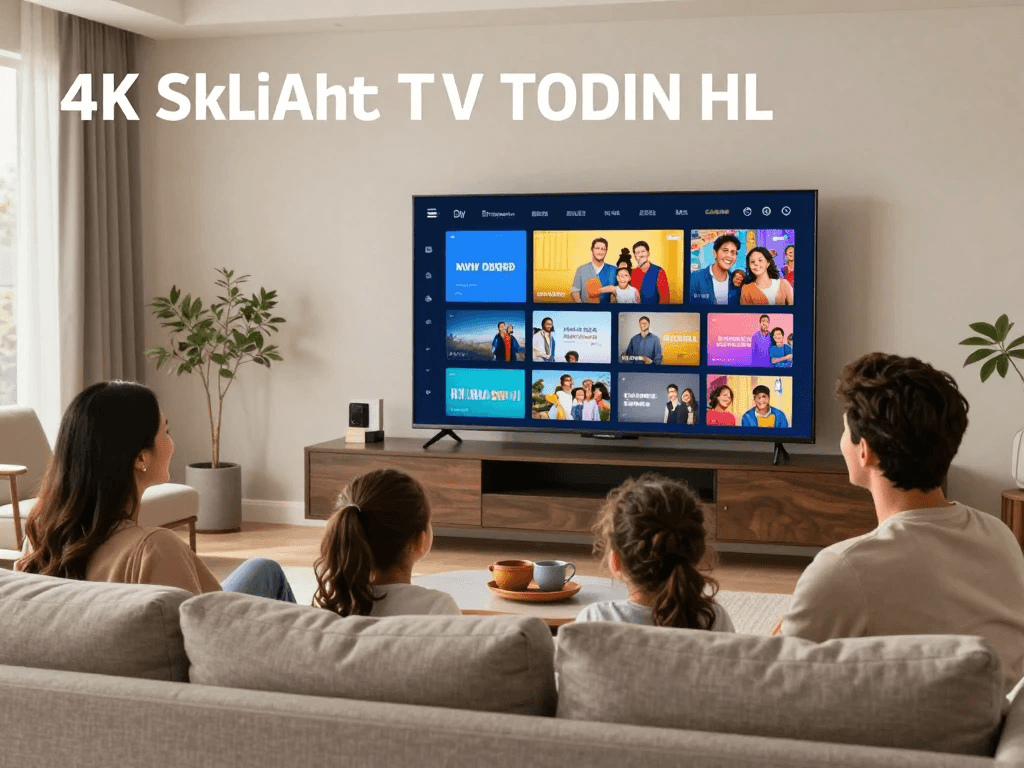
What Parents Should Know About IPTV and Privacy
Family streaming accounts can contain information about your household’s viewing behavior.
Before subscribing, look for the provider’s privacy policy.
Pay attention to:
- Information collected
- Account data
- Payment information
- Device information
- Viewing activity
- Cookies and tracking
- Third-party sharing
- Account deletion options
You do not need to understand every legal phrase in a privacy policy, but you should at least know what information the provider collects and how it says that information is used.
IPTV for Families: The Importance of Customer Support
Customer support is easy to overlook when everything works.
It becomes extremely important when something stops working.
A good provider should give you a clear way to:
- Reset your password
- Troubleshoot playback
- Manage devices
- Change your plan
- Cancel your subscription
- Resolve billing problems
Before subscribing, test the support process if possible.
You do not need to ask a complicated technical question. Ask something simple, such as whether your particular TV model is supported.
If the provider gives a vague answer before receiving your money, you should not expect dramatically better support afterward.
Frequently Asked Questions About IPTV for Families
What is the best IPTV for families?
The best IPTV for Families depends on your household’s priorities. Rather than selecting a service because it advertises the largest number of channels, compare family content, parental controls, simultaneous streams, device compatibility, reliability, price, and provider transparency. If you watch live sports, verify the specific networks and competitions you need. If you have young children, give parental controls much greater weight. If you have several viewers, prioritize simultaneous streams.
Is IPTV safe for families?
IPTV can be safe when you use a reputable and transparent provider, official applications, secure payment methods, and appropriate parental controls. The technology itself does not determine whether a provider is legitimate. You should investigate who operates the service and whether it has the rights necessary to distribute the programming it offers. The U.S. Copyright Office has explained that unauthorized streaming can implicate copyright law, so extremely cheap packages promising huge amounts of premium content deserve careful scrutiny.
Does IPTV have parental controls?
Some IPTV and live-TV services offer parental controls, but features vary considerably. You may find PIN protection, children’s profiles, content restrictions, age ratings, or purchase controls. You should verify the exact features before subscribing. You can also combine provider-level controls with parental controls built into your television, streaming device, smartphone, or tablet.
Can multiple family members watch IPTV at the same time?
Yes, if your plan permits multiple simultaneous streams. However, the number varies by provider and package. Some services allow only one stream, while others allow several. Sling, for example, currently lists one stream for Orange, up to three for Blue, and up to four for Orange & Blue, subject to channel-specific restrictions.
How many IPTV streams does a family need?
For a small household, two streams may be enough. A family of four may benefit from three or more, while larger households may want four or more. The best way to decide is to think about how many people are likely to watch different programming simultaneously during your busiest viewing period.
What internet speed does IPTV require?
There is no single speed that works for every household. Your requirements depend on video resolution, the number of simultaneous streams, Wi-Fi quality, other internet activity, and the provider’s technology. A household with several simultaneous HD or 4K streams will need substantially more capacity than someone watching one stream at a time.
Is IPTV better than cable for families?
It can be, but it depends on what you value. IPTV and other internet-based TV services can provide flexible device access and subscription options, while cable can offer established channel packages and infrastructure. Compare the actual channels, price, DVR options, local programming, simultaneous viewing, and equipment requirements rather than assuming one delivery method is automatically superior.
What should parents check before choosing IPTV for Families?
Parents should check children’s programming, parental controls, simultaneous streams, device compatibility, provider transparency, pricing, cancellation terms, customer support, and privacy policies. You should also verify that the provider is legitimately authorized to distribute the programming it offers.
Is a huge channel list a sign of the best IPTV service?
No. A huge channel list may be attractive, but it does not tell you whether the service is reliable, legitimate, family-friendly, or good value. Focus on the channels your family actually watches and verify that they are included in your specific plan.
Can I use IPTV on multiple TVs?
Many internet-based television services support multiple compatible devices, but the number of simultaneous streams may be restricted. Check both device compatibility and active-stream limits before purchasing.
Should I buy an annual IPTV subscription?
Only after you are confident that the service works well for your household. Test the application, channels, devices, parental controls, simultaneous streams, and customer support first when possible. Also read the cancellation and refund terms carefully.
How can I avoid IPTV scams?
Research the provider before paying. Look for clear company information, transparent pricing, legitimate customer support, terms and privacy policies, and a sensible explanation of the service. Avoid unexpected payment requests, pressure tactics, suspicious downloads, and unusually cheap offers that promise enormous amounts of premium content.
Final Verdict: Choosing the Best IPTV for Families
The best IPTV for Families is the one that fits your household—not the one with the flashiest advertisement.
Before you subscribe, think about what actually happens in your home on a typical evening. Do your children watch separately? Does someone regularly watch sports? Do you need local channels? Do you have three or four simultaneous viewers? Will your children use their own profiles? Do you need DVR functionality? Are you comfortable with the provider’s pricing and cancellation terms?
Once you answer those questions, the decision becomes much easier.
Your priorities should generally be:
- Legitimacy and transparency
- Family-friendly programming
- Strong parental controls
- Enough simultaneous streams
- Reliable performance
- Compatible devices
- The live channels and sports you actually watch
- Transparent pricing
- Straightforward cancellation
- Responsive customer support
Do not let an enormous channel count distract you from these fundamentals. A smaller, trustworthy service that reliably delivers the programming your family enjoys can be far better than a questionable package promising everything for almost nothing.
You should also remember that prices, channel lineups, device support, and stream limits can change. For example, current Sling documentation shows that plans, stream limits, short-term passes, DVR options, and local-channel availability can differ by package and location.
The smartest approach is therefore to compare the current official terms immediately before purchasing.
Your Family IPTV Checklist
- Identify your family’s must-have channels.
- Decide how many people need to watch simultaneously.
- Check children’s programming.
- Review parental controls.
- Confirm your TV and streaming-device compatibility.
- Check local-channel availability for your ZIP code.
- Verify sports coverage if it matters to your household.
- Compare the complete monthly cost.
- Read cancellation and refund terms.
- Check the provider’s privacy policy.
- Research the company behind the service.
- Avoid suspicious payment requests.
- Test the service before making a long commitment when possible.
Ready to Choose Your Family’s IPTV Service?
Start with your household rather than the provider’s marketing page. Write down your essential channels, number of viewers, children’s needs, devices, and monthly budget. Then compare legitimate services against those requirements.
That simple process can help you find a television setup that gives everyone in your household something to watch—without paying for features you will never use or taking unnecessary risks with an unclear provider.
Most importantly, remember that the best IPTV for Families is the service that combines the content you want with the safety, reliability, flexibility, and control your household actually needs.